
WOLF retro DESIGN REVIEW. 6th January 2019
A retro review looks at products that are at least over ten years old from a present-day WOLF design perspective. While the technology and fashion of the period influence design, and are taken into consideration, great design ideas will transcend their eras to be timeless.
Interesting and factual information may be provided, but our review aims to deliver insight from the perspective of a designer’s mind and eyes.
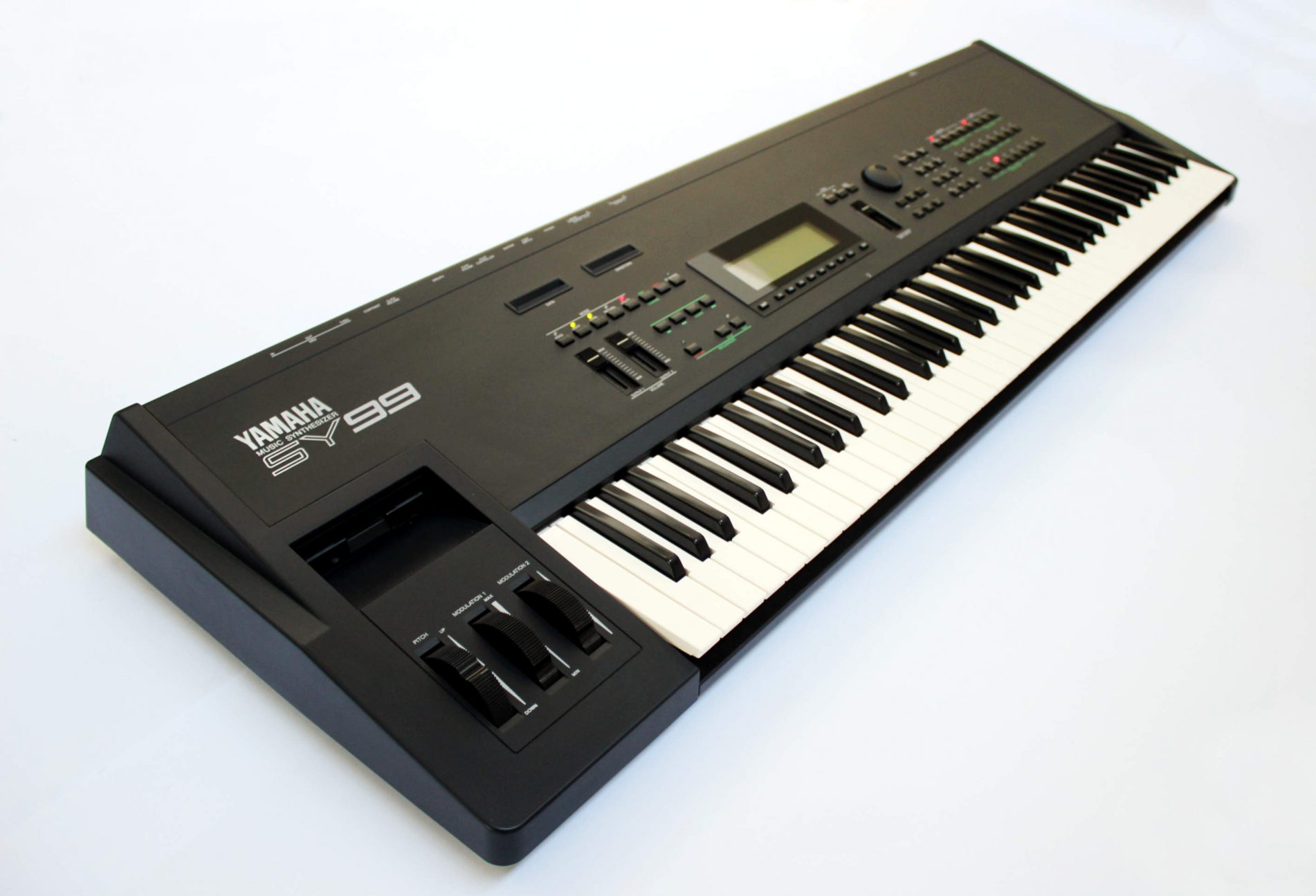
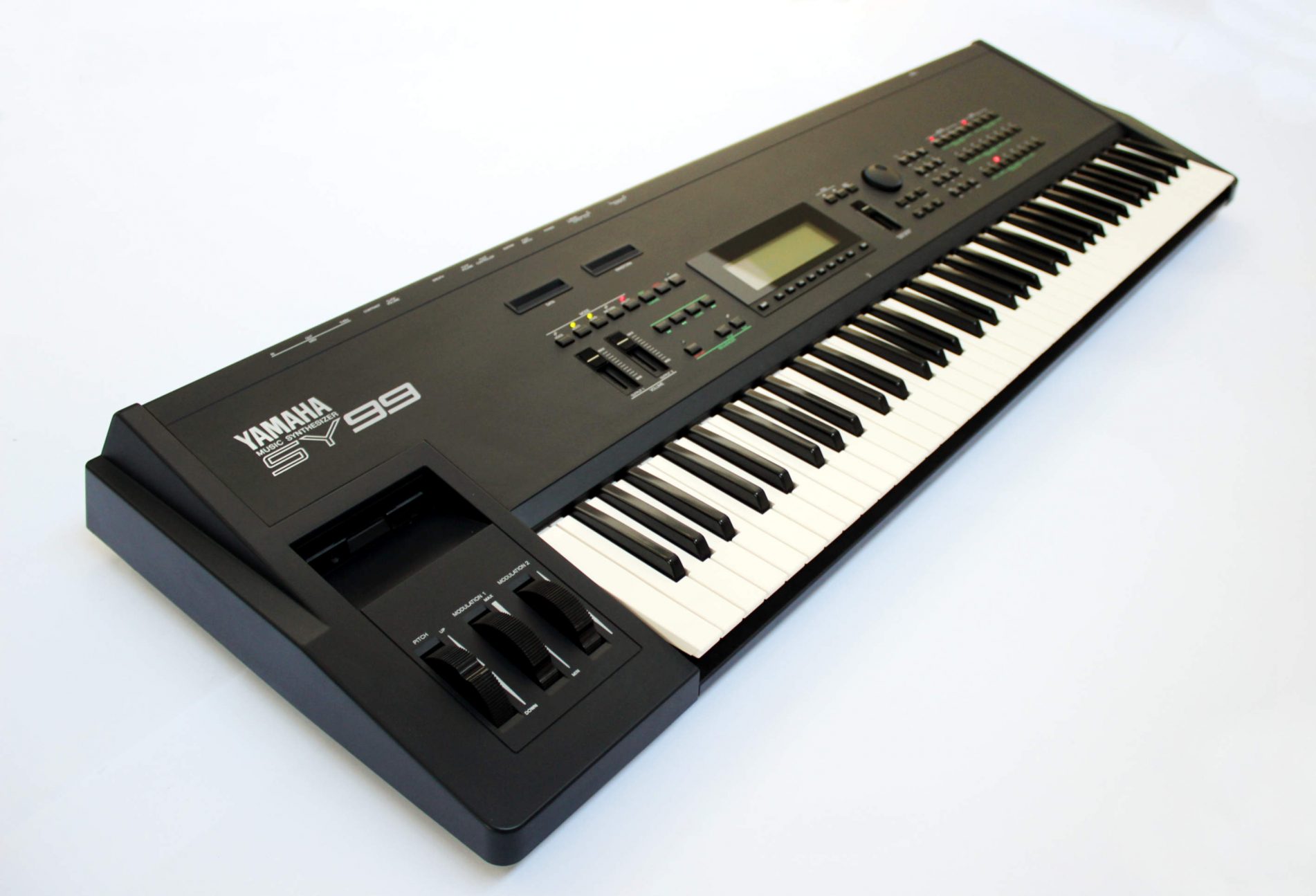
The SY99 is the SY77 perfected.
Introduction
Product Focus
As with most reviews the focus is on the design and its evolution with the synthesizer. The functioning systems and sound quality are not necessarily considered.
Product description
In our opinion the SY77 felt rushed into production due to the fierce competition Yamaha faced from Roland and Korg. The SY99 which came out just two years later in 1991 seems to have made up for that by overcoming all that the SY77 lacked. It was an improvement over the SY77 in the same way that the DX7II was an improvement over the DX7.
Price and Availability.
Good examples that have been stored in their original hard cases do pop up from to time to time but can command high prices. Be aware that the SY99 can be expensive to ship due to its size and weight. Out of the entire SY range this is clearly the best model and most collectible.
Additional information
Putting aside the DX7C this was Yamahas first mass produced 76 key synthesizer/workstation. Being an improvement over the SY77 and building upon all of Yamahas technology to date it was a very complete and well-balanced machine. It is still well loved by many original owners as a robust machine that is still modern enough to use.
REVIEW
Elegant and understated
First impressions / Delight
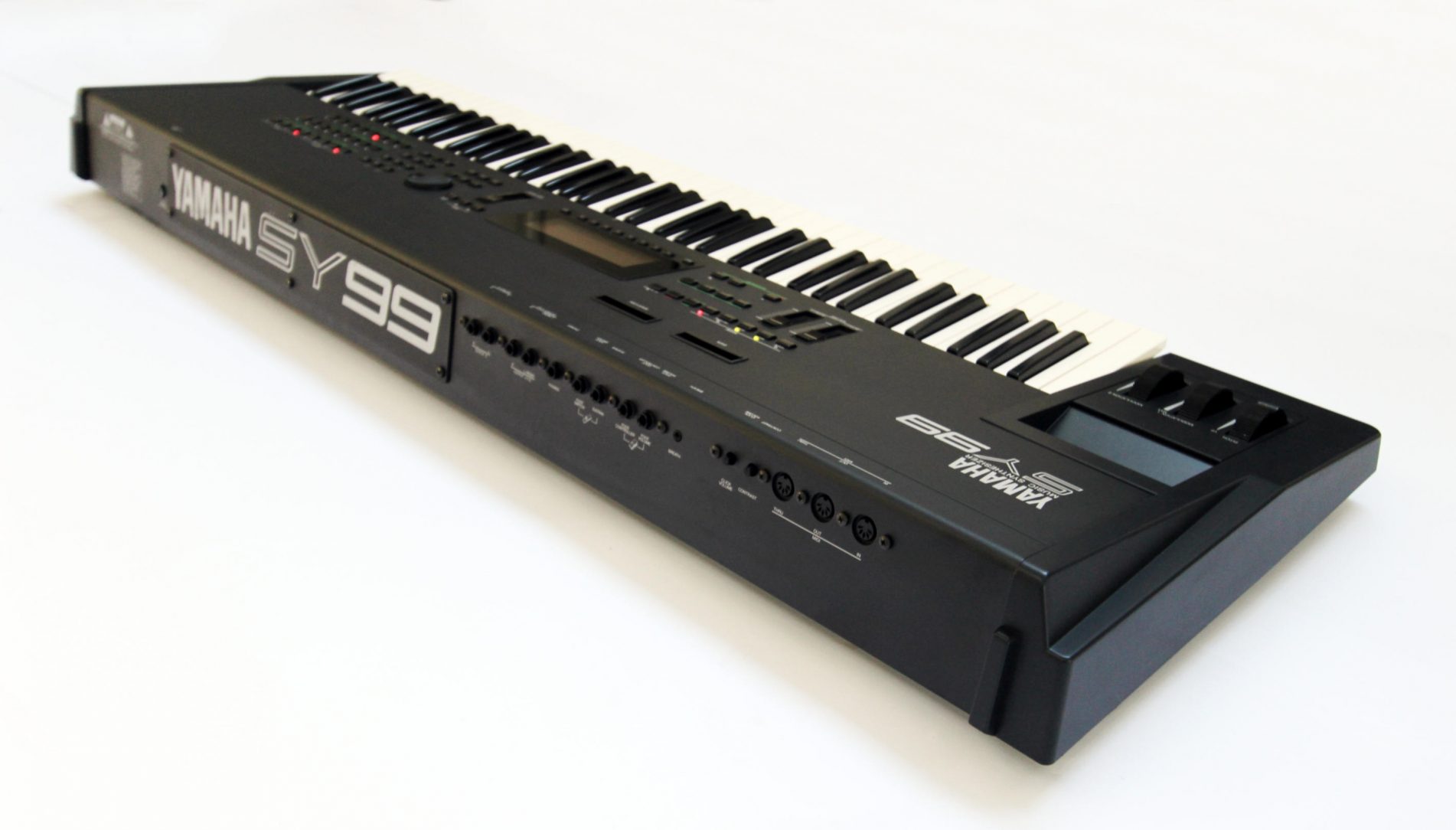
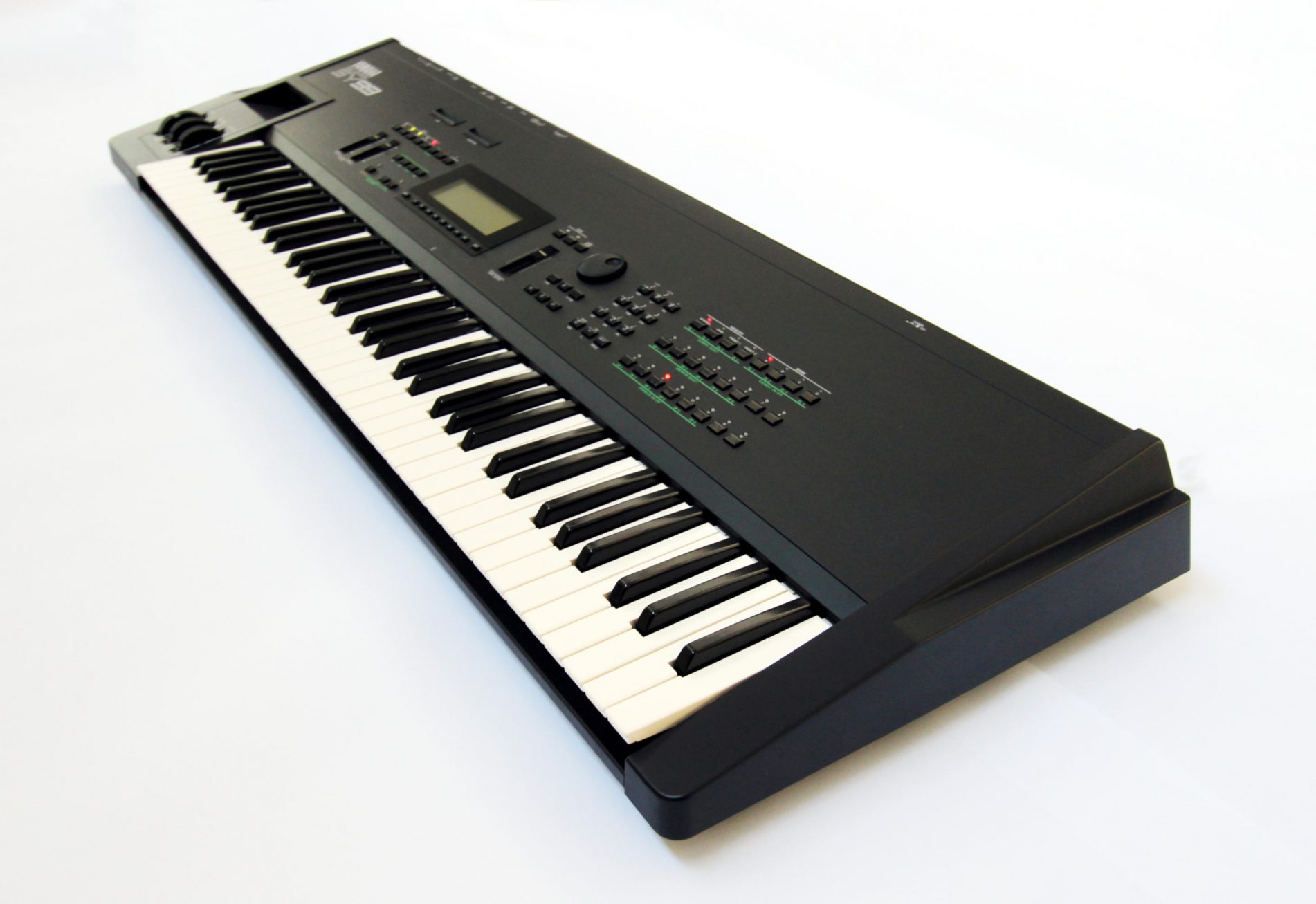
Our first impression was that it looks very clean and minimalistic, appropriate to the early 1990s. Most people will feel like it looks just like the SY77 but a little longer. That is true but the additional octave gained over the SY77 balanced out what previously was a little bulky in our opinion. Proportionately this synth is much more elegant and appealing.
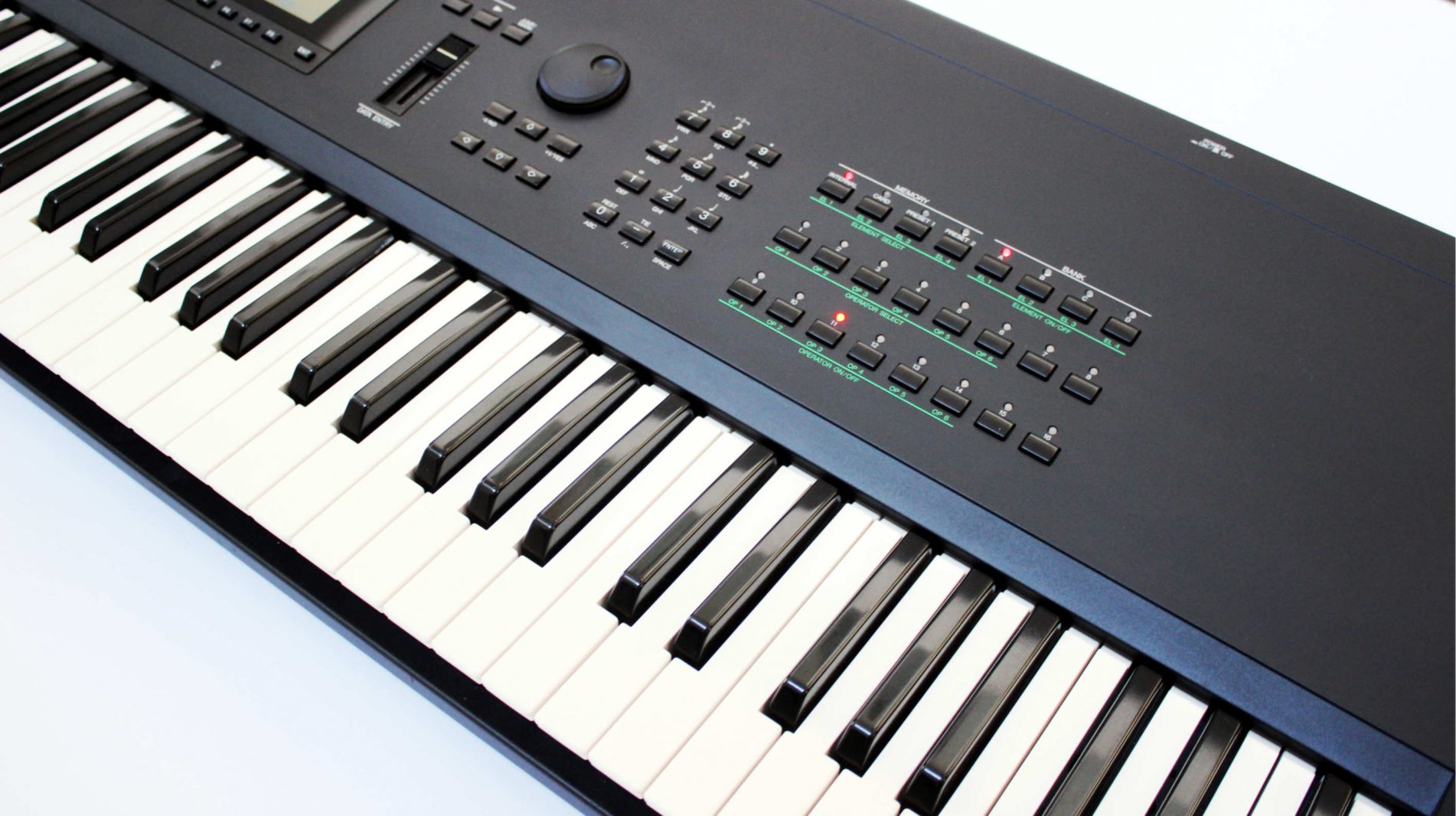
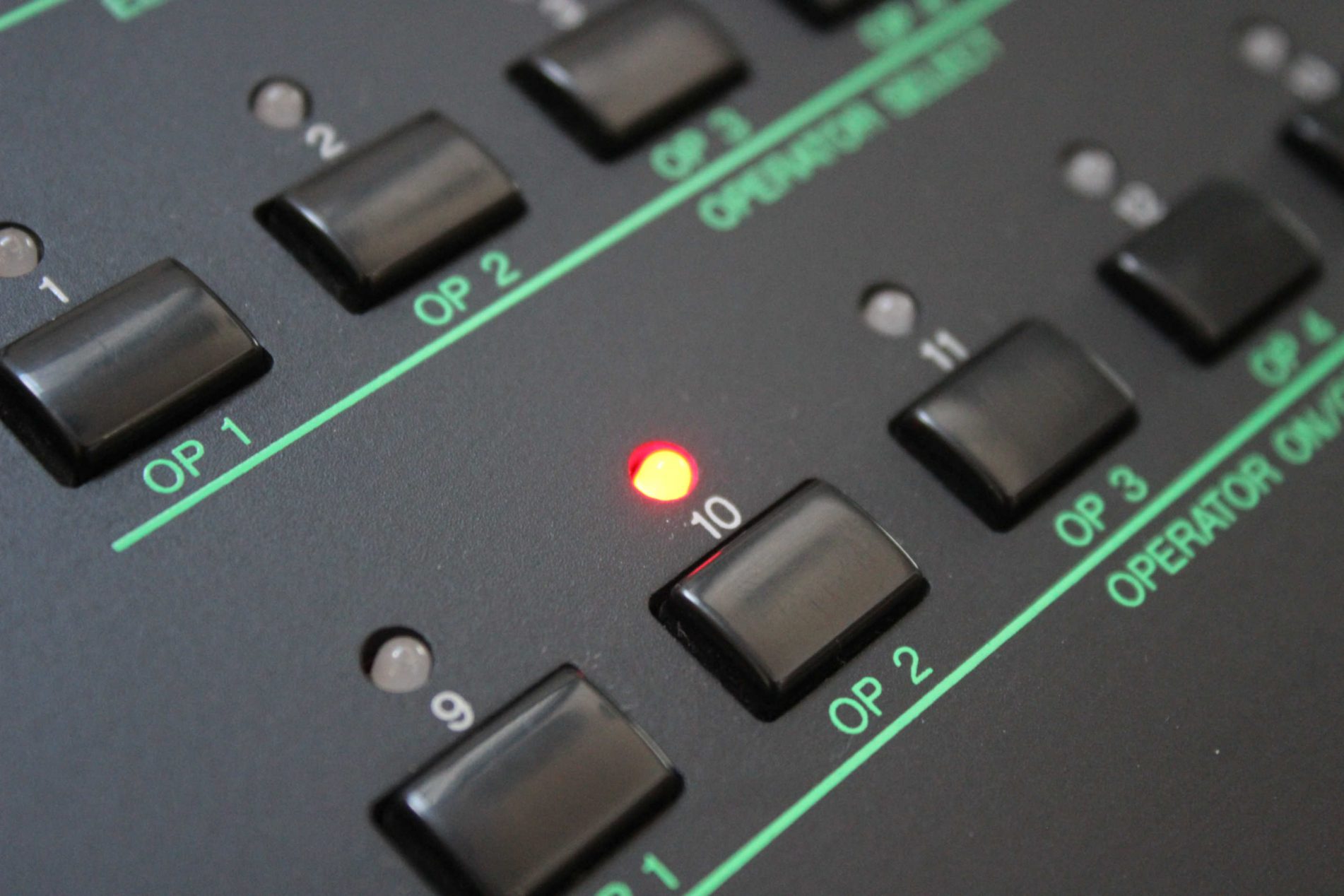
With all the buttons remaining very similar to the SY77, there is even more blank surface area due to the stretched body and this furthers the design simplicity.
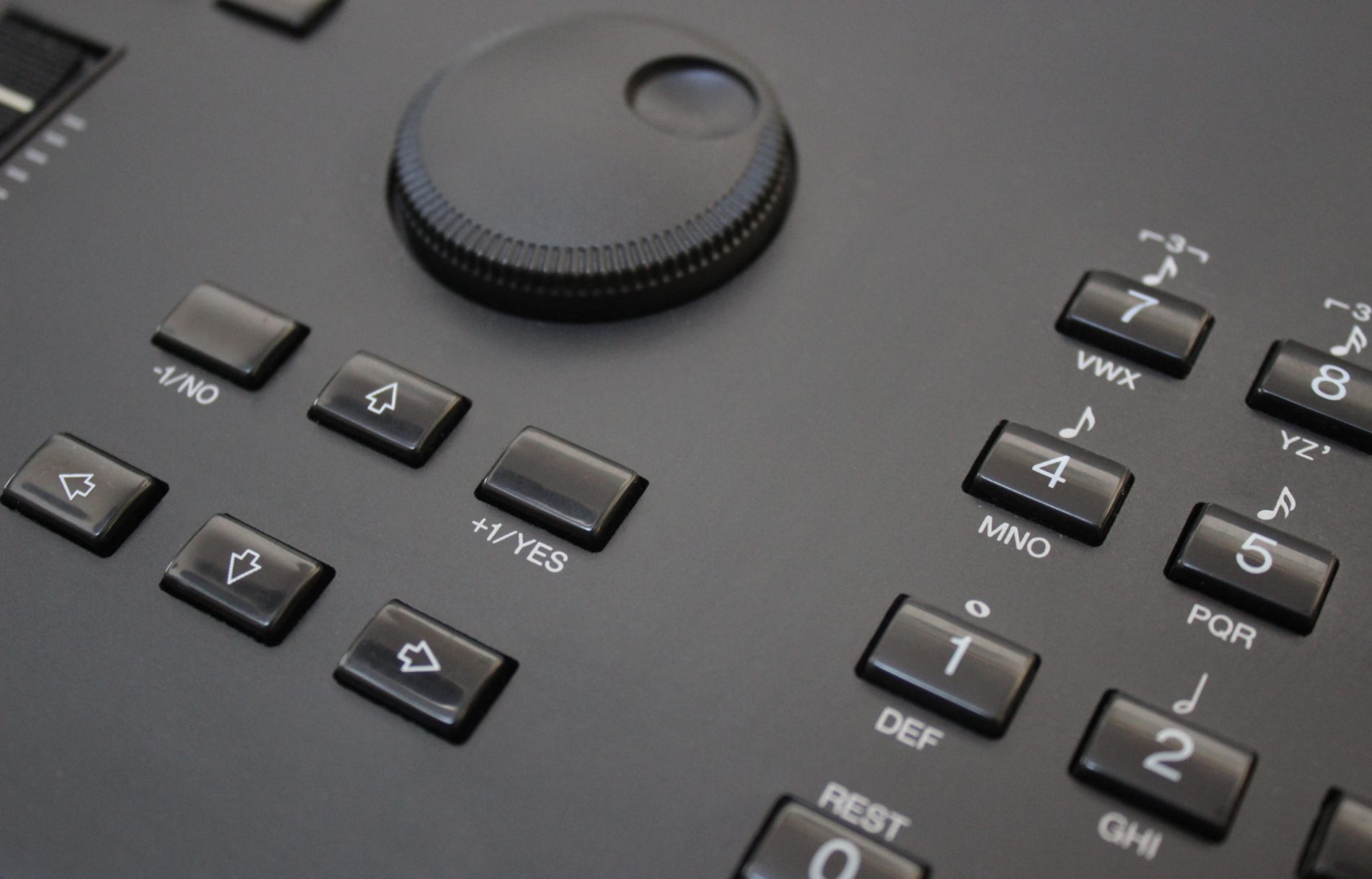
Shares the same buttons as the SY77
Exterior Design Review
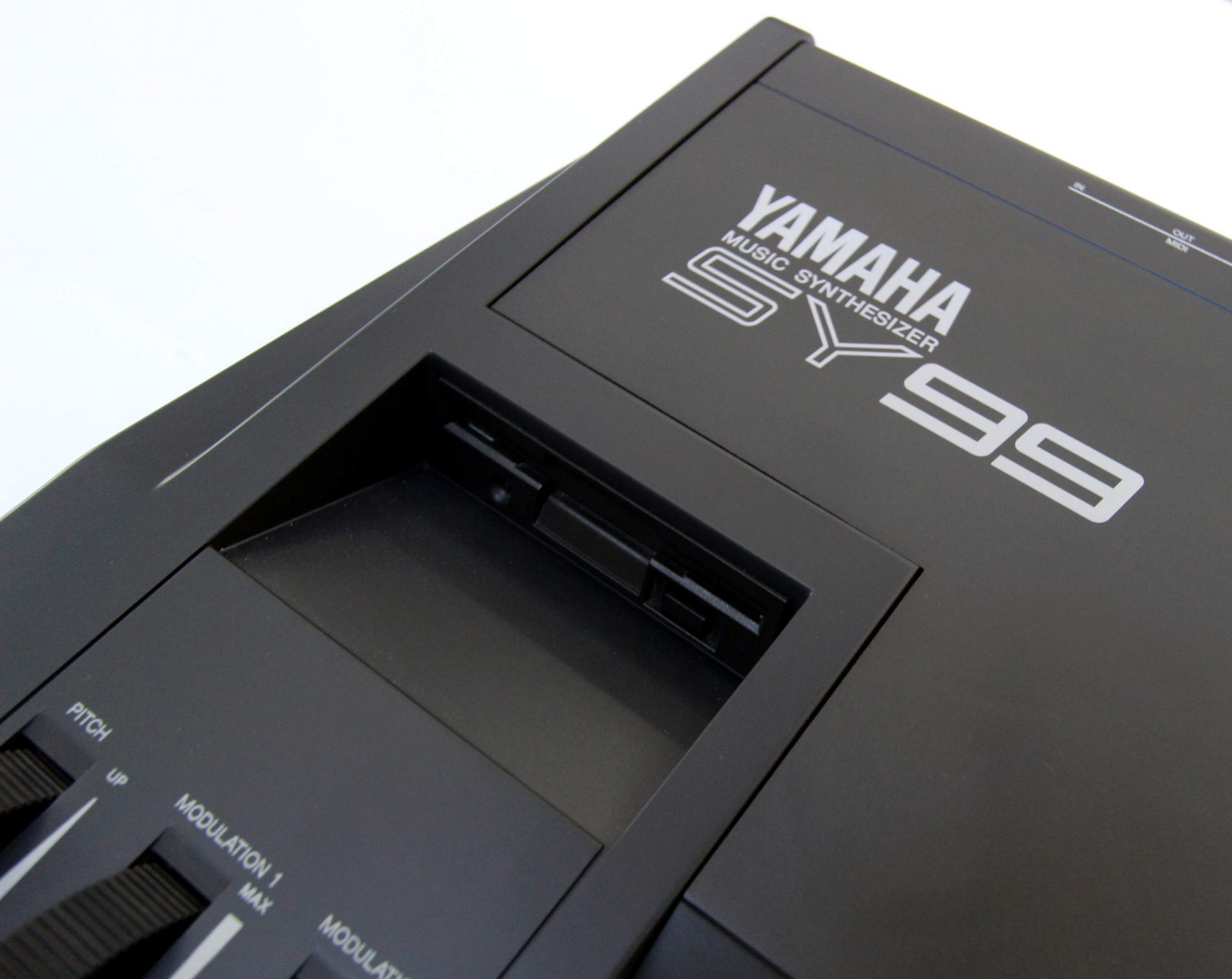
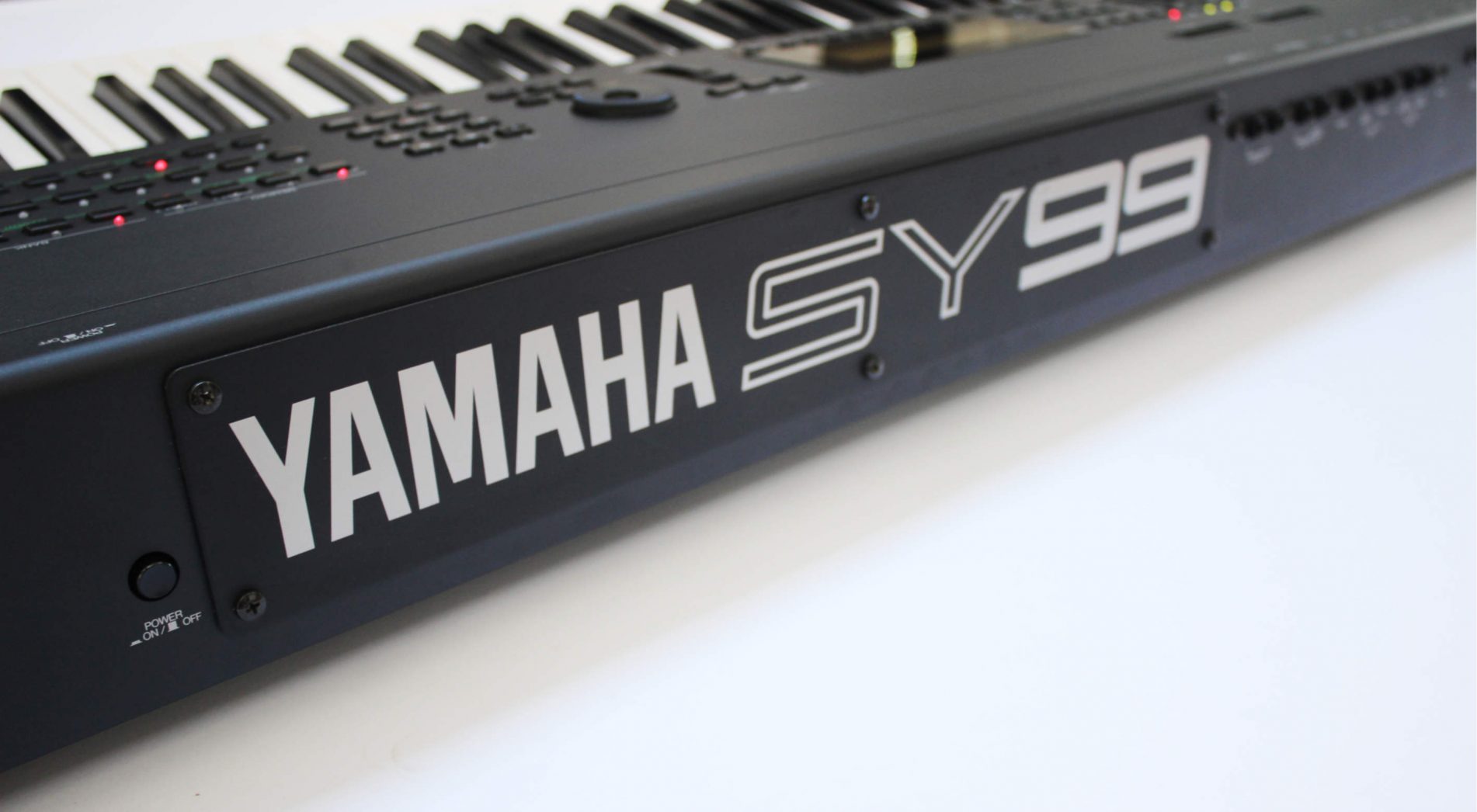
The new disk drive location is probably the only thing that upsets the relative symmetry of the layout. It’s a big machine and Yamaha tried to make it look slenderer by giving the end panels some design attention by means of stepped layering. This effect works better on the SY99 than on its predecessor (the SY77). The rear panel has a large removable plate where the Logo is positioned. This is necessary for expansion, Yamahas first keyboard to offer hardware upgrades.
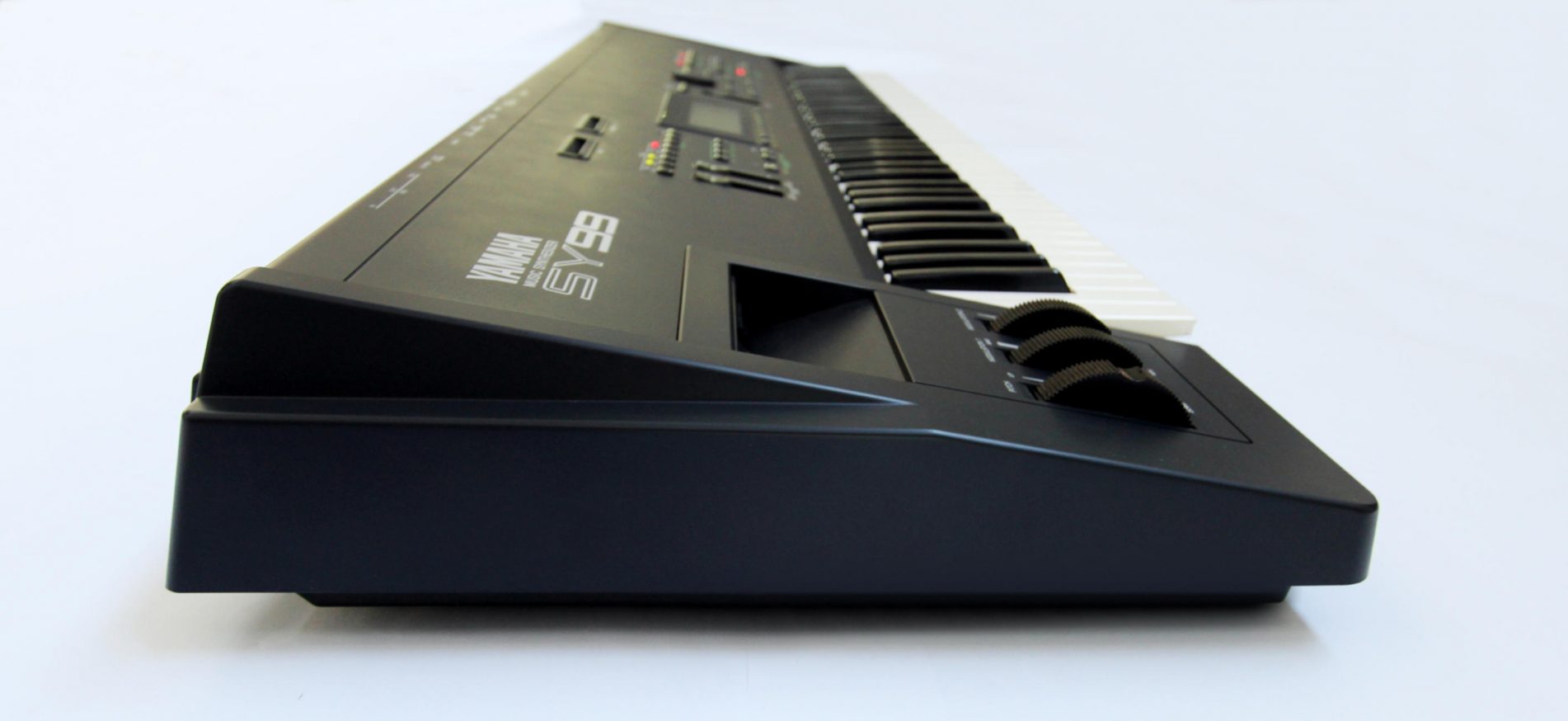
Stretched out and looking slenderer.
Craftmanship.
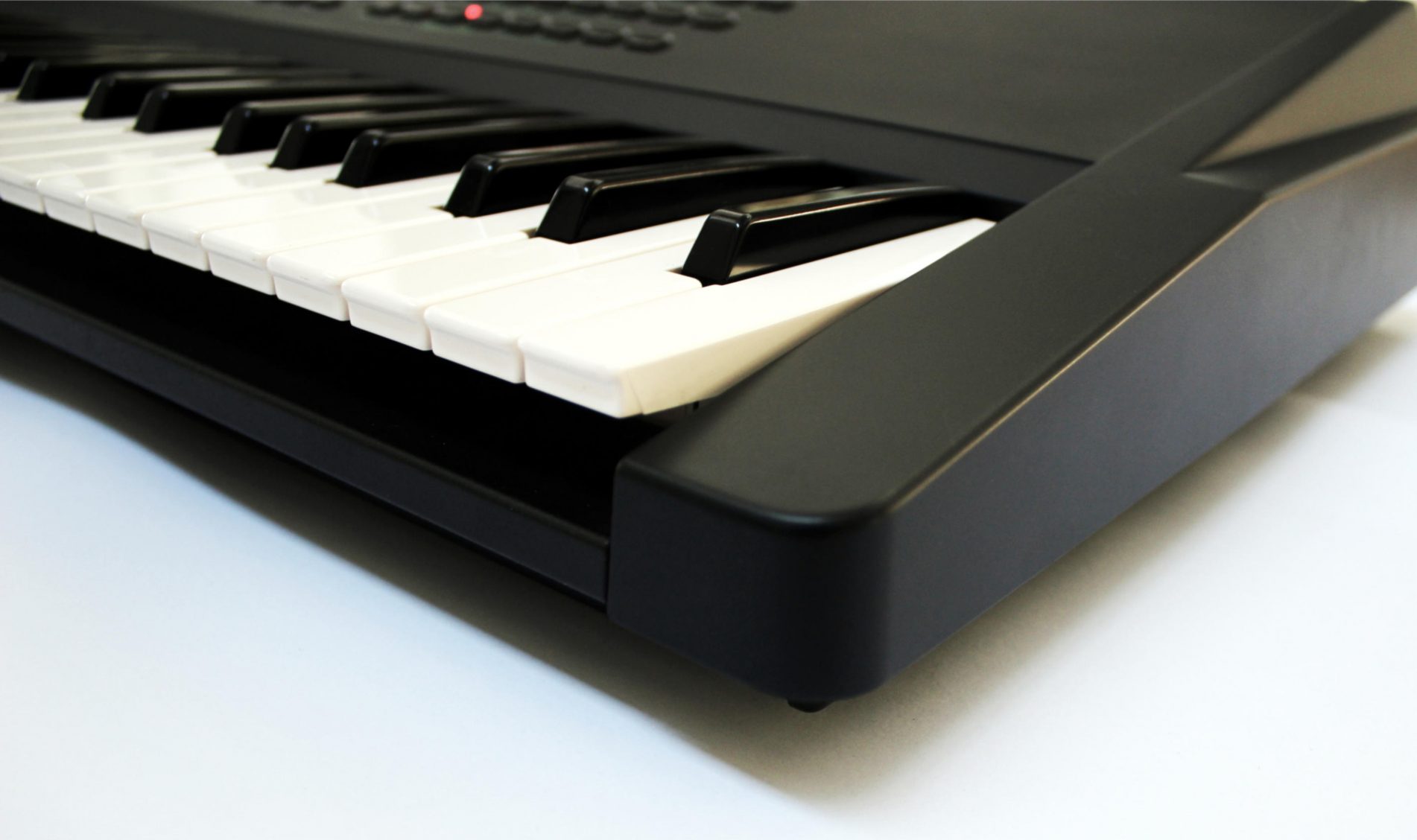
As with its predecessor it still feels a little plasticky because of the large plastic end panels. This is a shame since much of the unit is metal. Furthermore, the plastic on the end panels are painted and many machines show a lot of paint ware on their corners.
It is well assembled overall with no visible screws, and very heavy at almost 20KG. At the time it was a very expensive machine and Yamaha could have done a little more with the exterior to help justify its price tag. Perhaps they could have embossed some of the logo print of introduced metal end pieces with a slightly different colour or texture.
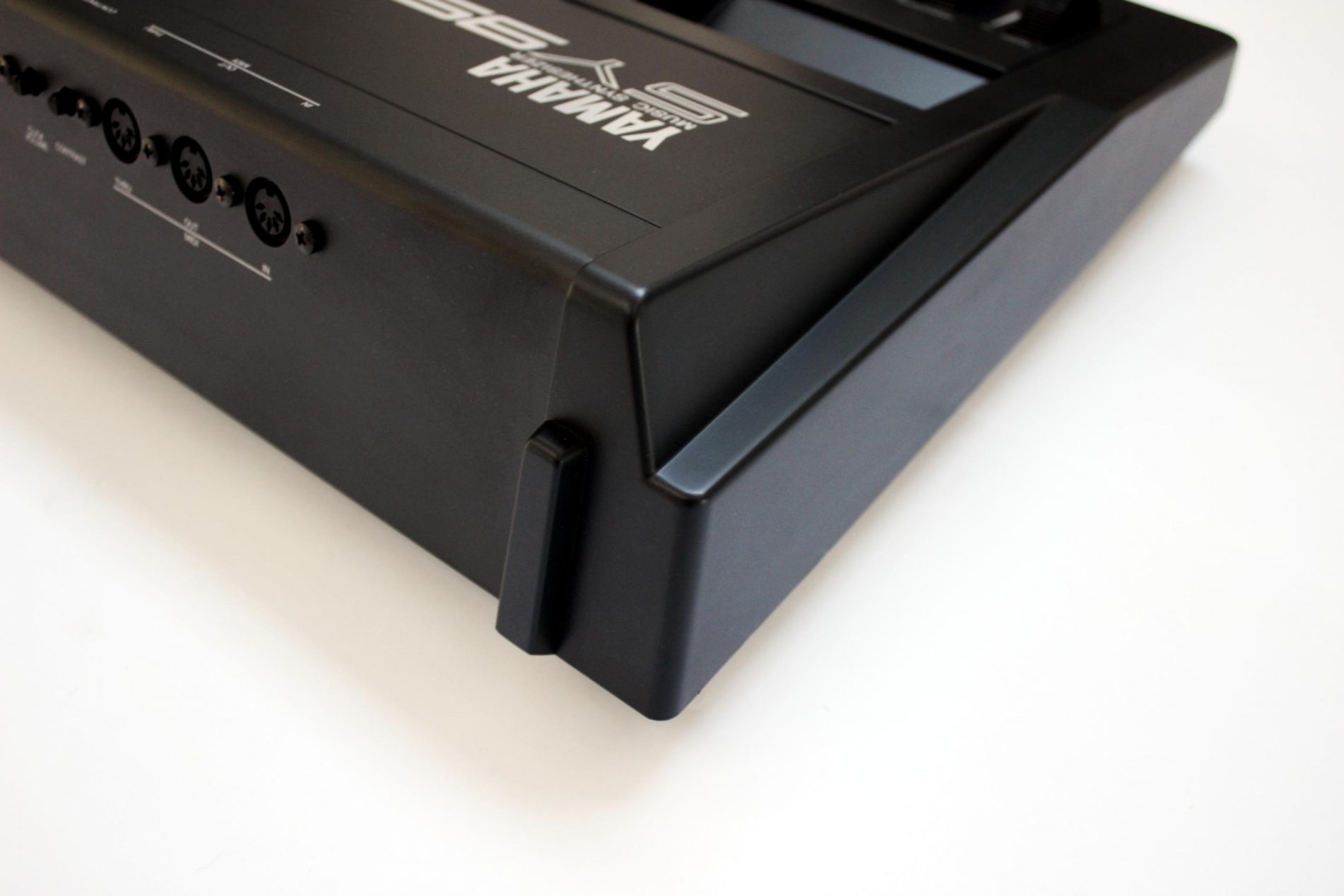
The last Yamaha Synth to have a rear bumper
FUNCTION- Experience.
With increased memory and more contemporary sounds brings this machine to the forefront for 90s house and dance tracks. It’s a significant improvement over the SY77.
The best view of this machine is from the front because the whole front is on a slope which is designed to make it feel slender but is also practical for screen visibility.
Our main criticism as with all SY models is still with the buttons which are slightly too small and don’t feel nice to push. As they age, they also tend to get stuck and need servicing.
Desirability / Collectability
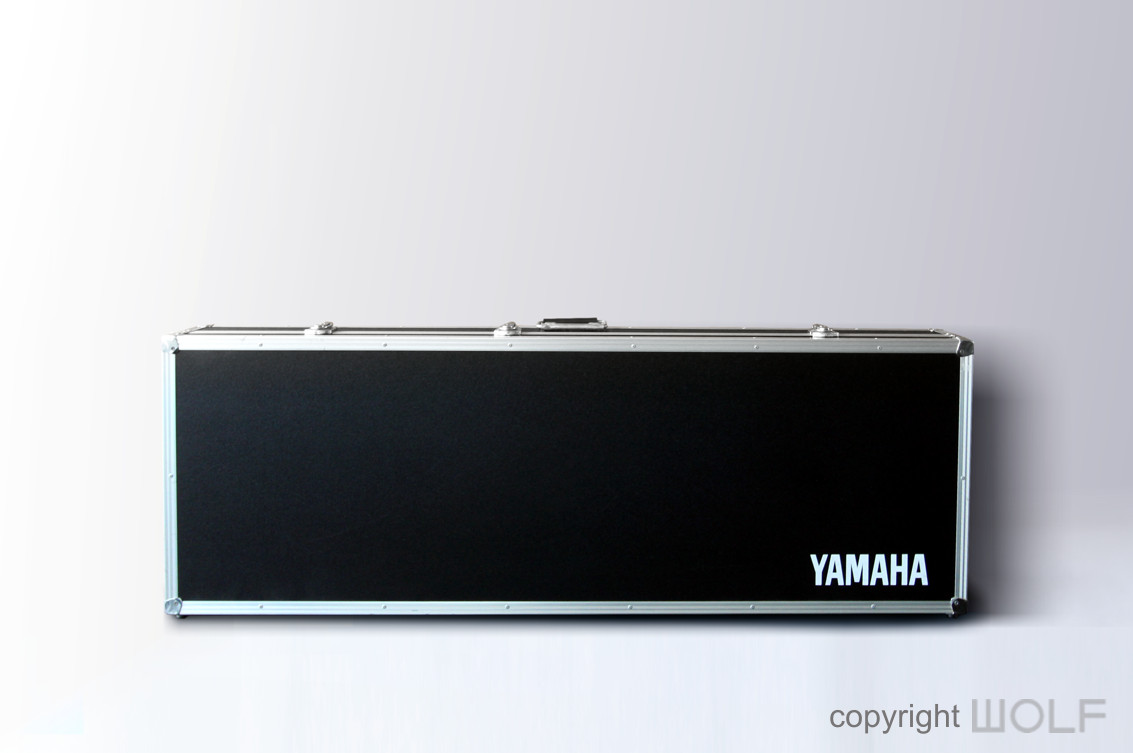
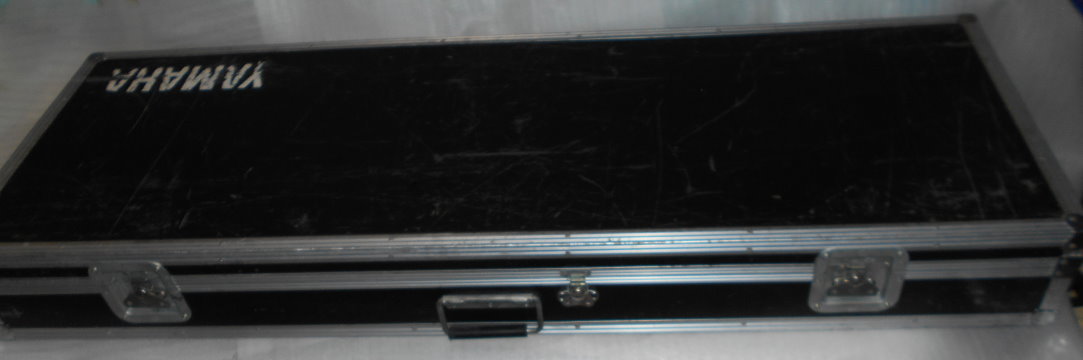
The SY99 was king of the SY series and was a formidable workstation at the time. It was however very expensive when new at almost US $4000, which limited sales. As such they are relatively rare to find in near mint condition. The case is particularly rare and well worth the extra investment if you come across one.
At present they are quite under-rated because of their age but these machines are still very powerful and contemporary. As a stand-alone workstation, we think it’s a keeper.
 The case is rare!
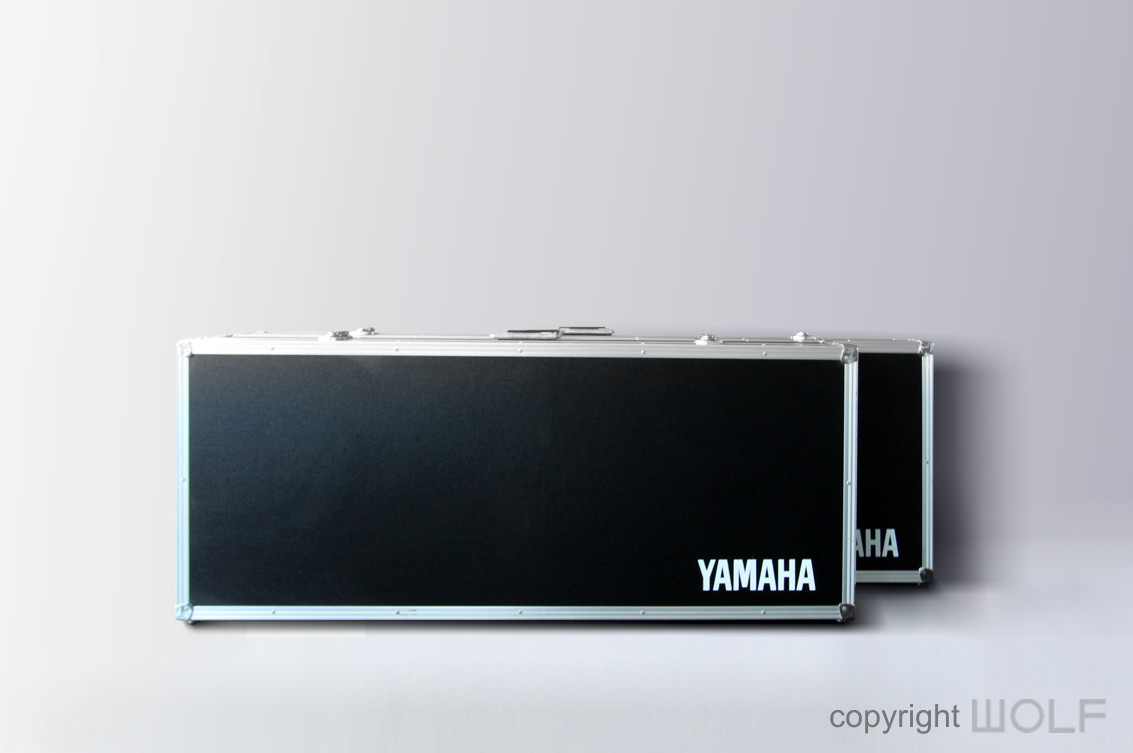
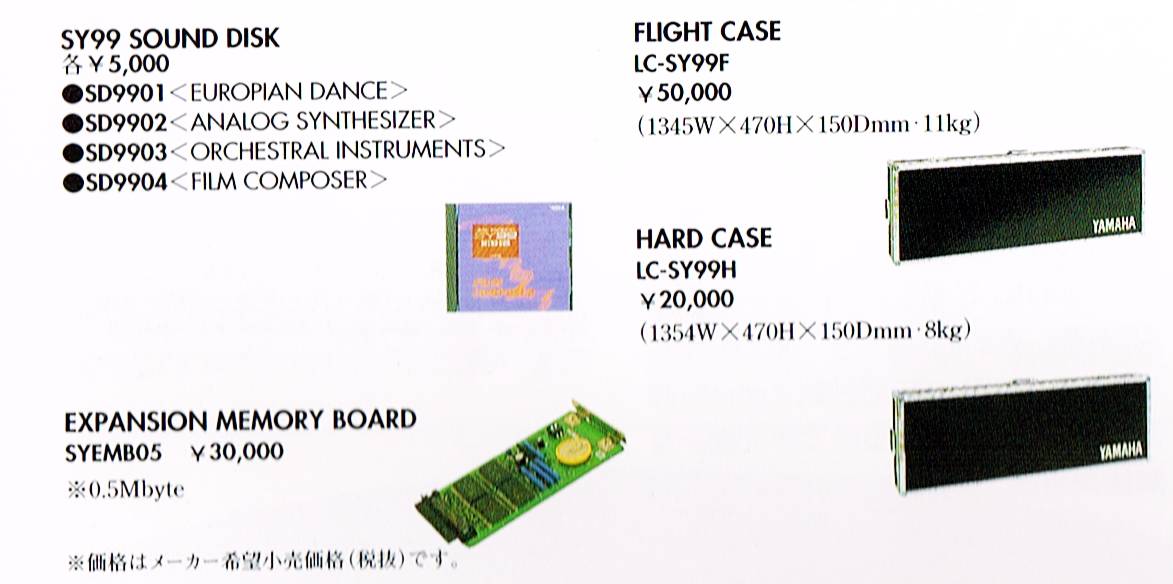
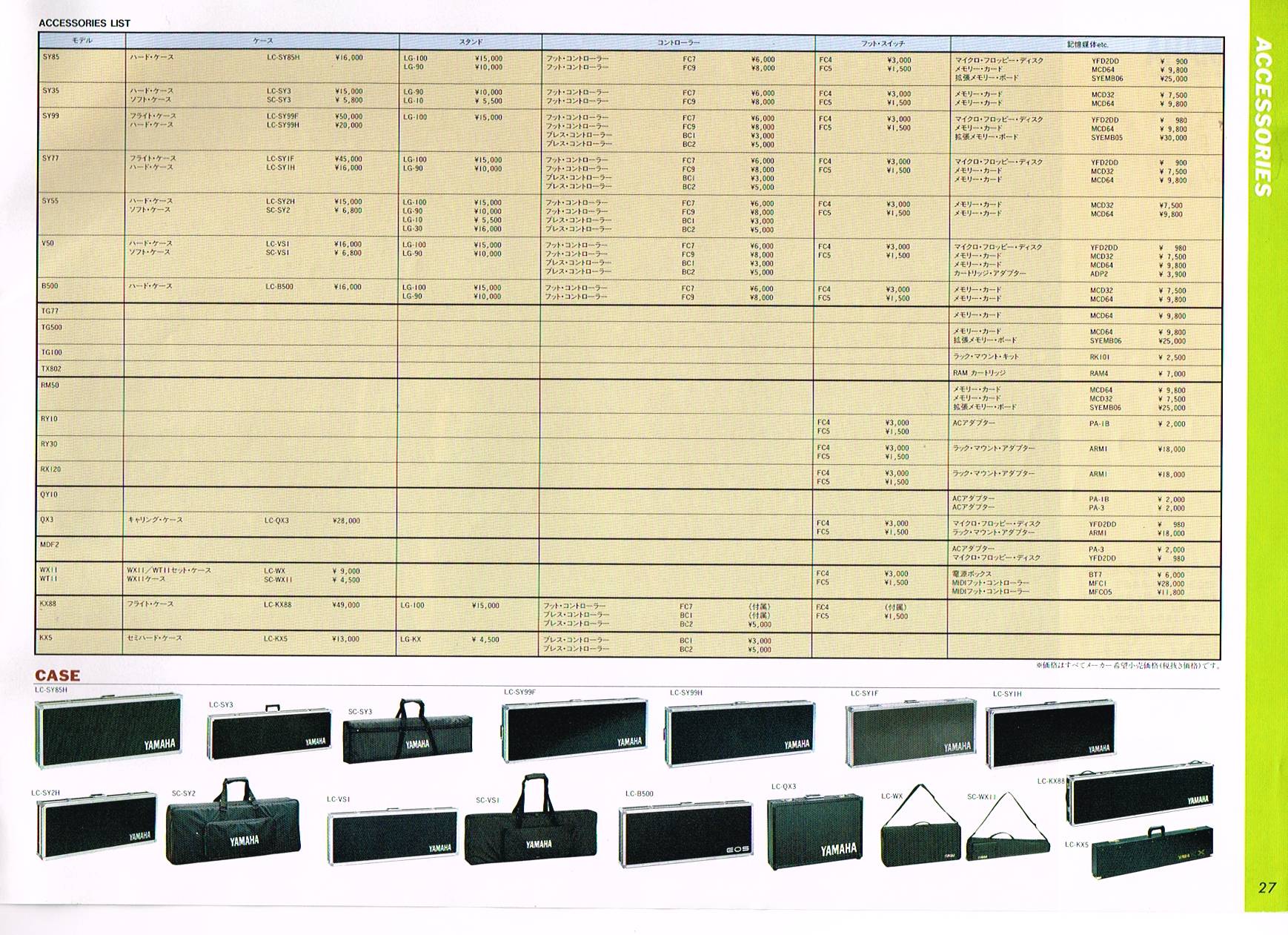 The SY99 was far sale as late as 1997, and various catalogs from 1992 to 1996 suggested the SY99 had both a hard case and a flight case. However in all our years we have never seen the flight case.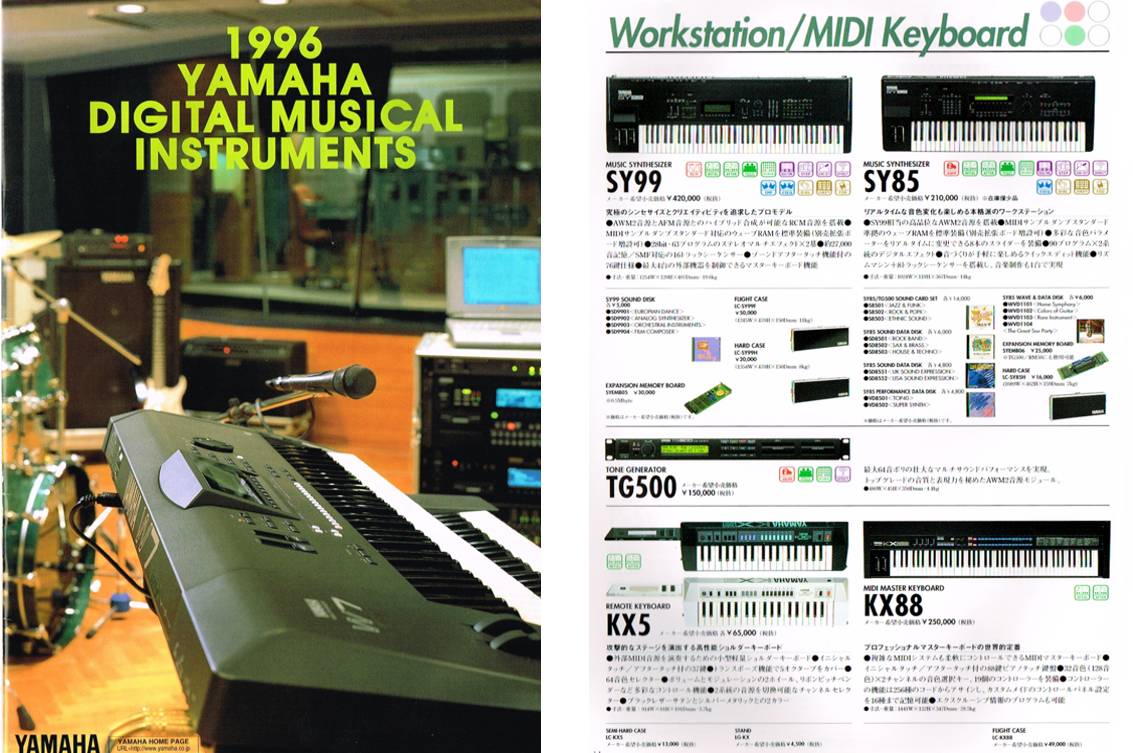
This 1997 Catalog is the last place Yamaha showed two cases available for the SY99

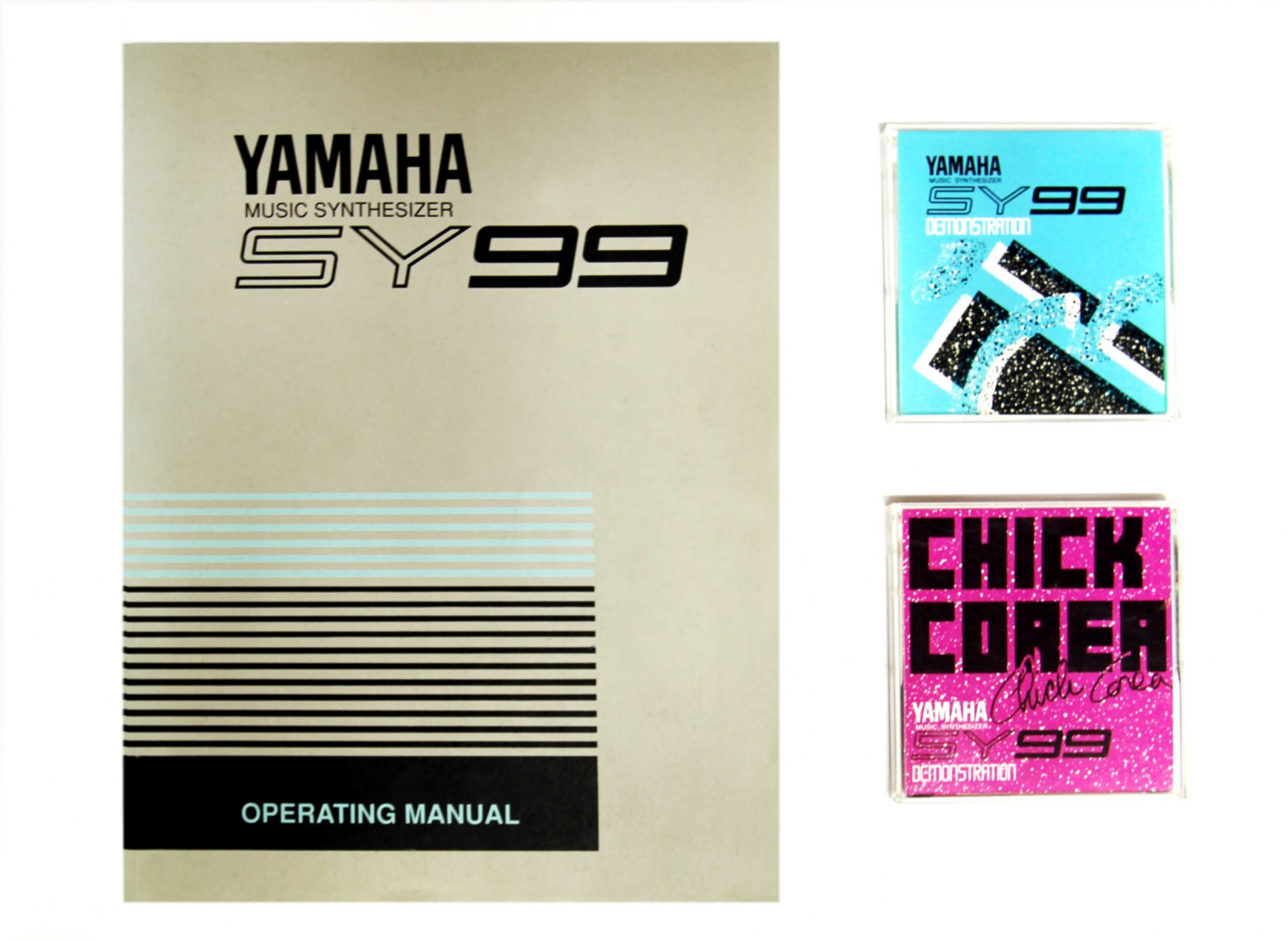
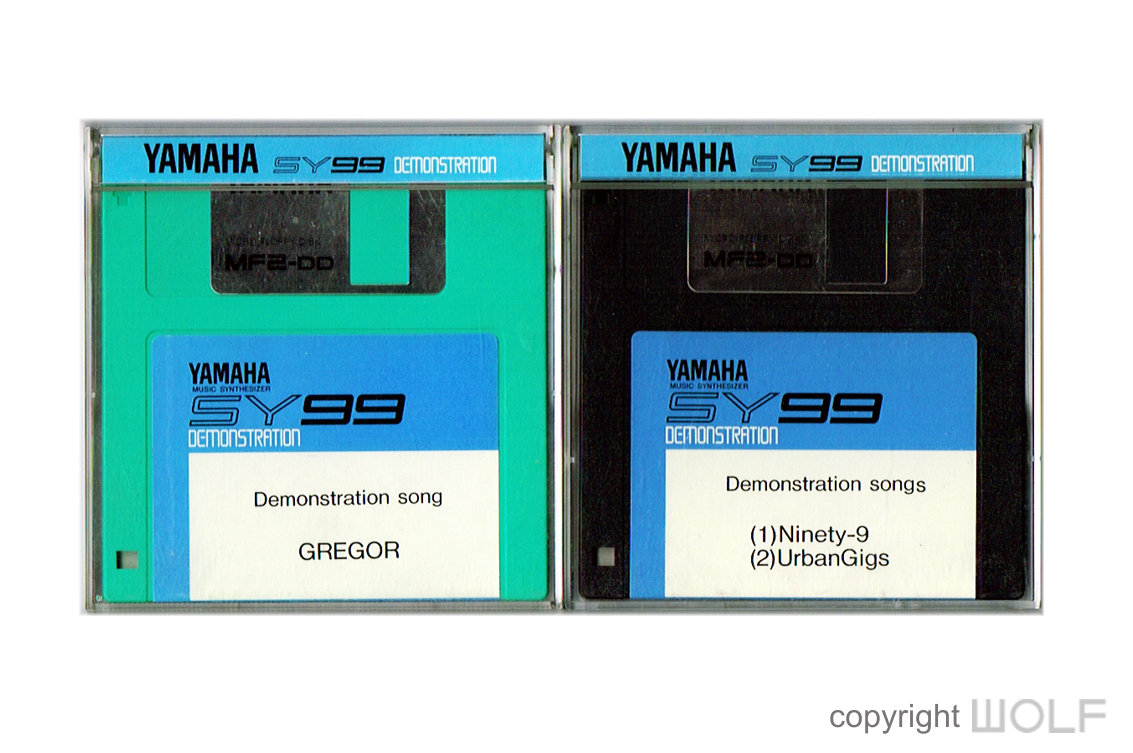
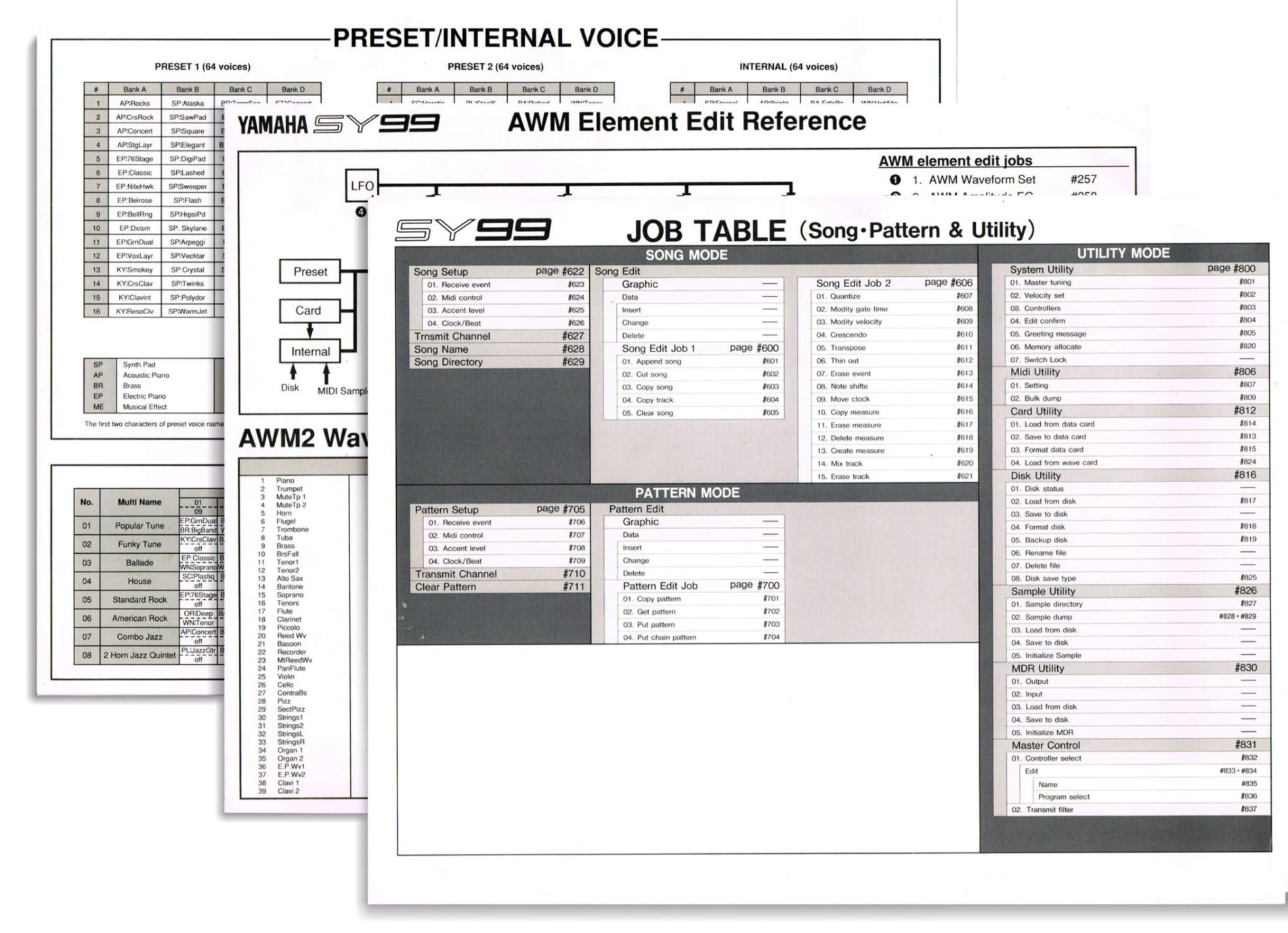
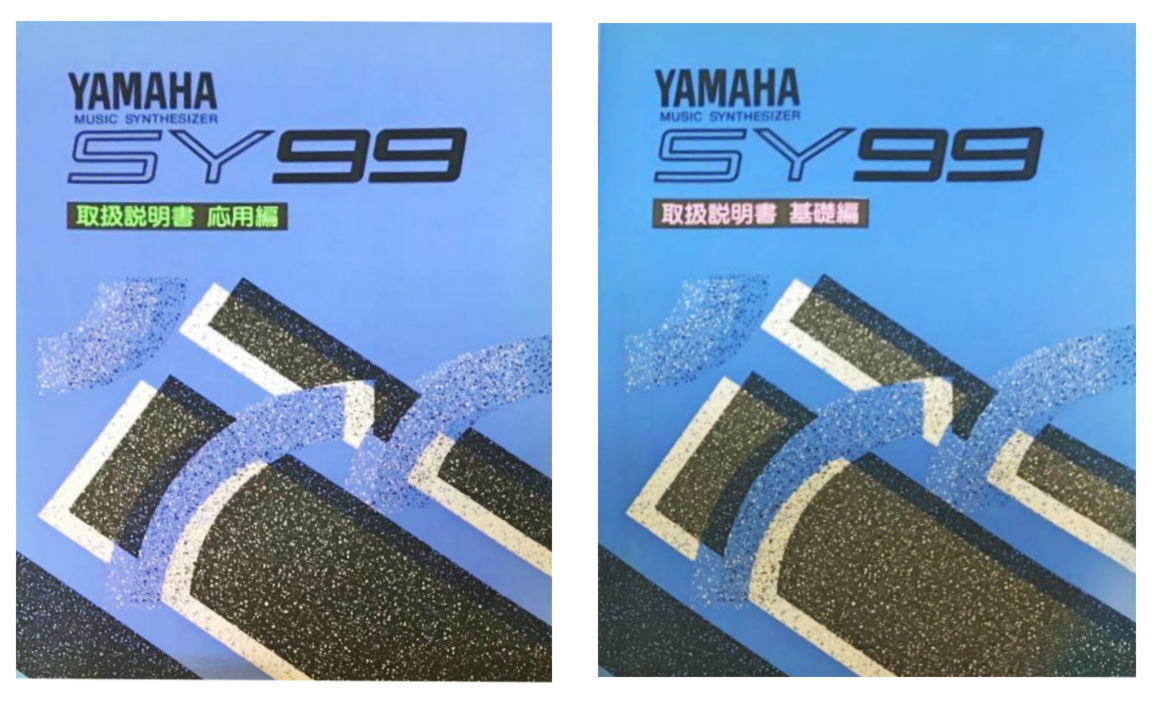
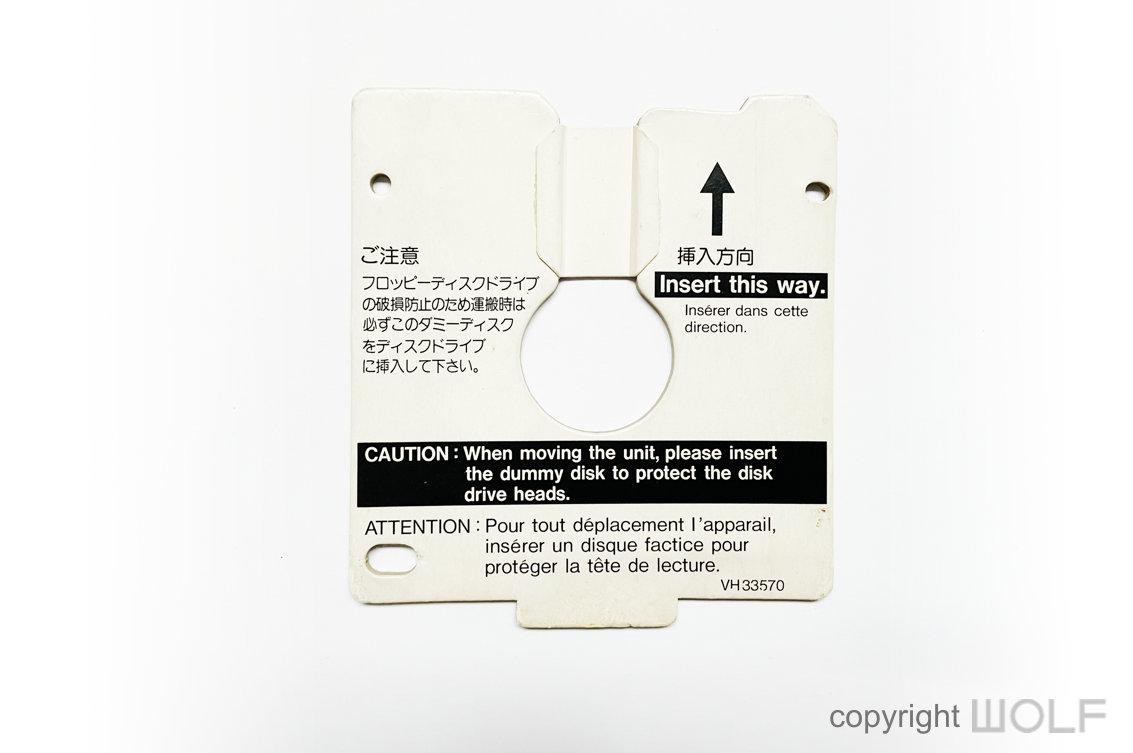
The SY99 manual was similar in design style to that of the SY77. There were also two standard demonstration disks that came standard with the unit.
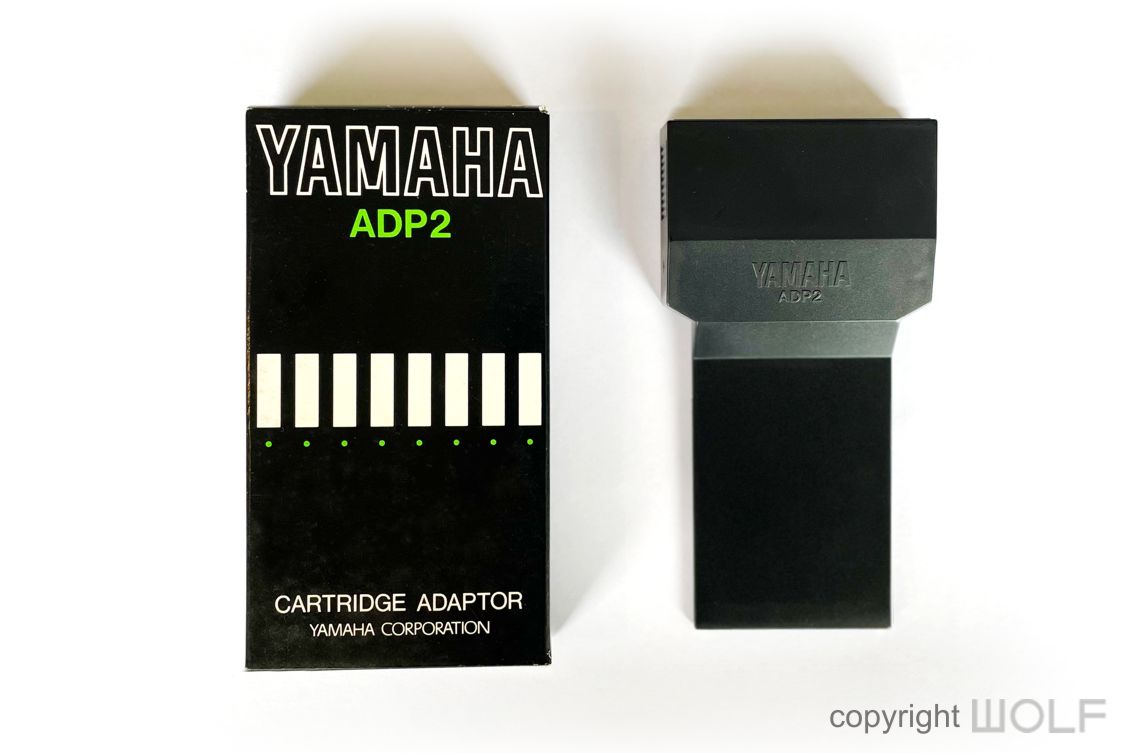 The ADP2 is one of Yamaha’s most rare synthesizer accessories. It was relatively unknown as it was rather unnecessary due to disk drive technology. The ADP2 allows you to directly access sounds from DX ROM cartridges. Interestingly we have yet to see the ADP2 featured in any of Yamaha trade literature. This image is of one found in Japan and is in mint condition with original box.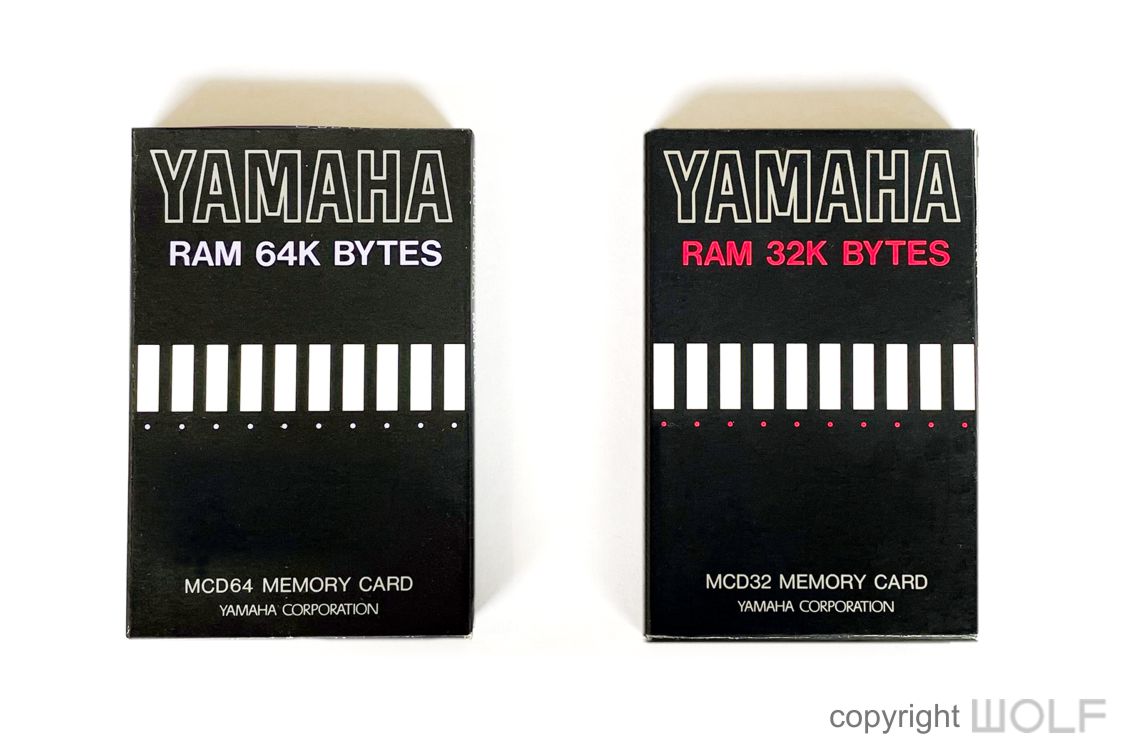
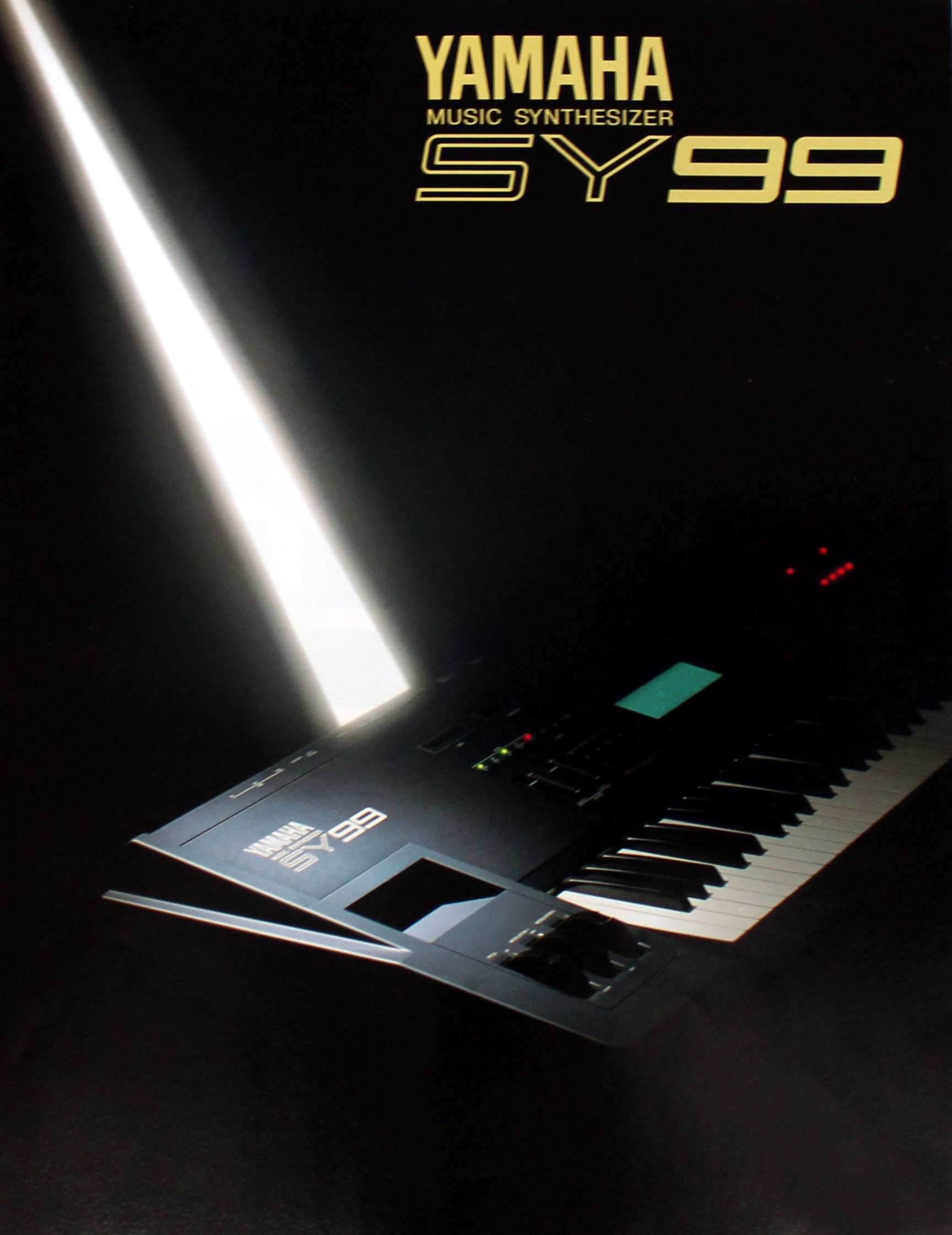
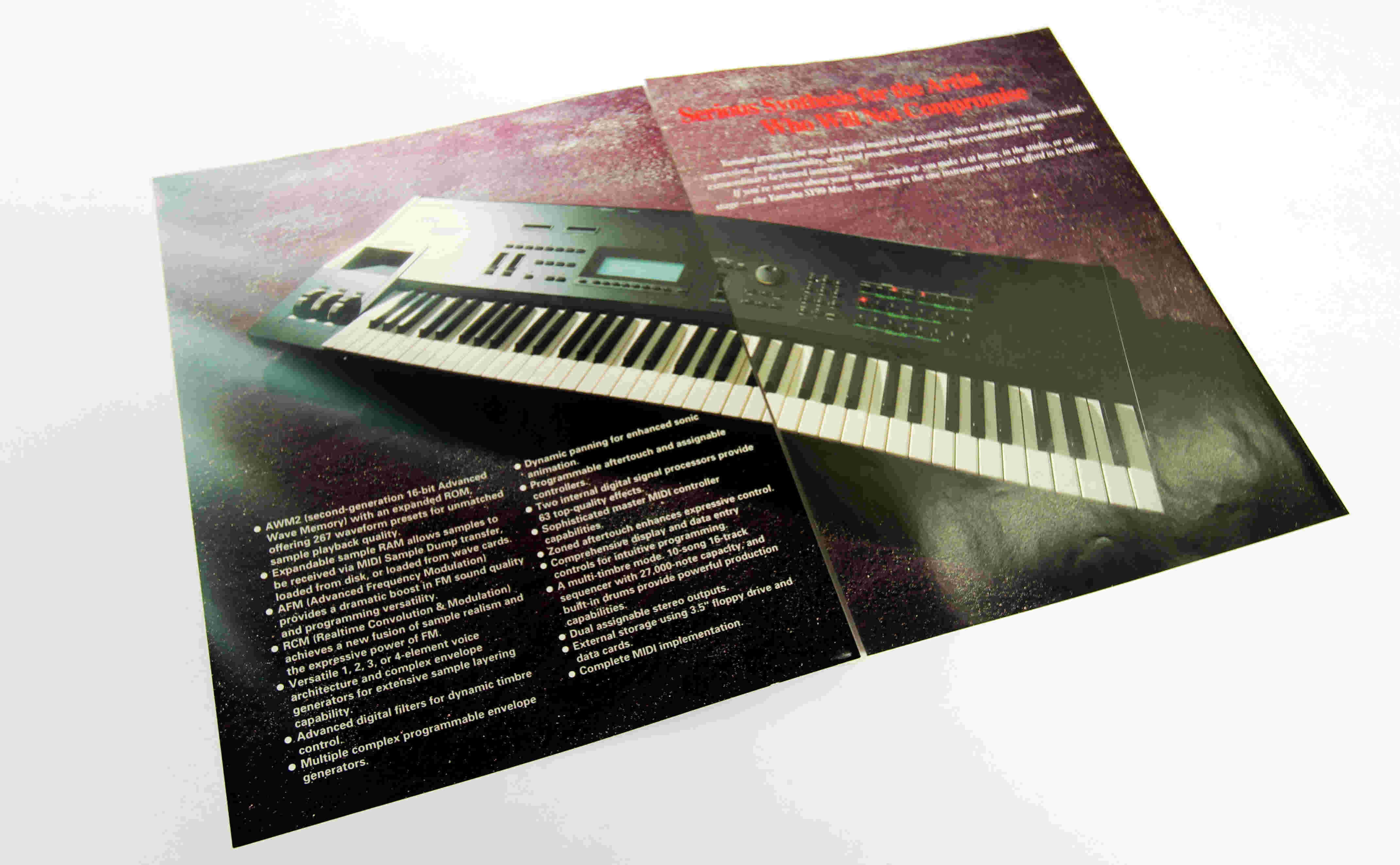
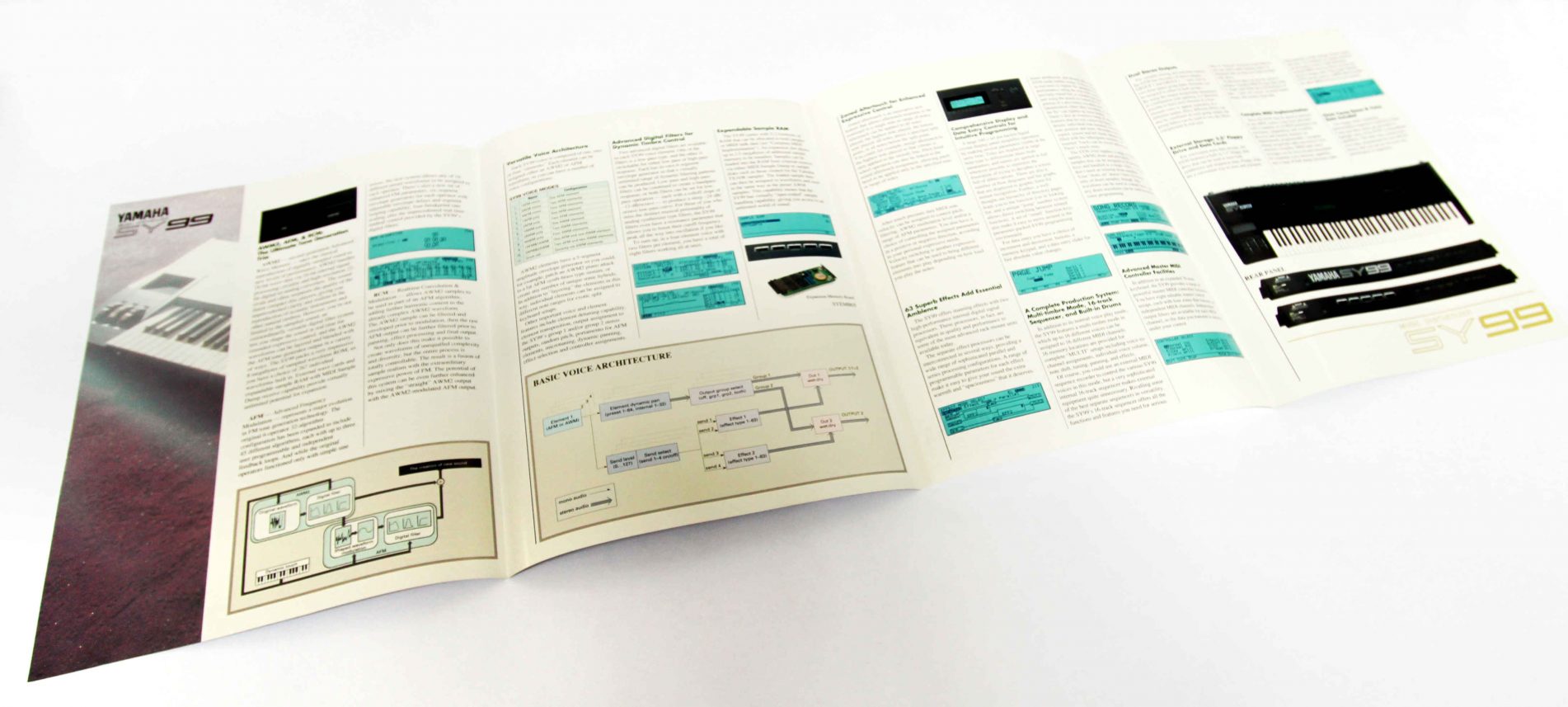
The brochure was smaller, simpler and in our opinion less impressive than the SY77. That surprised us considering the SY99 came in as the new Flagship model.
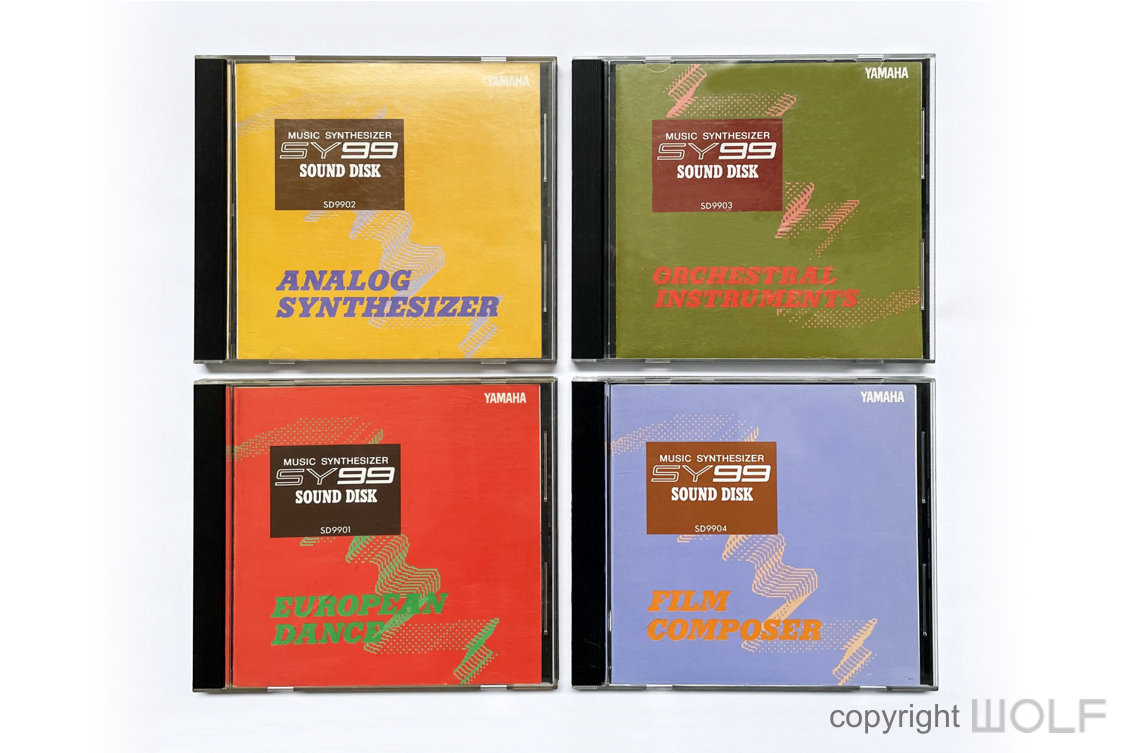
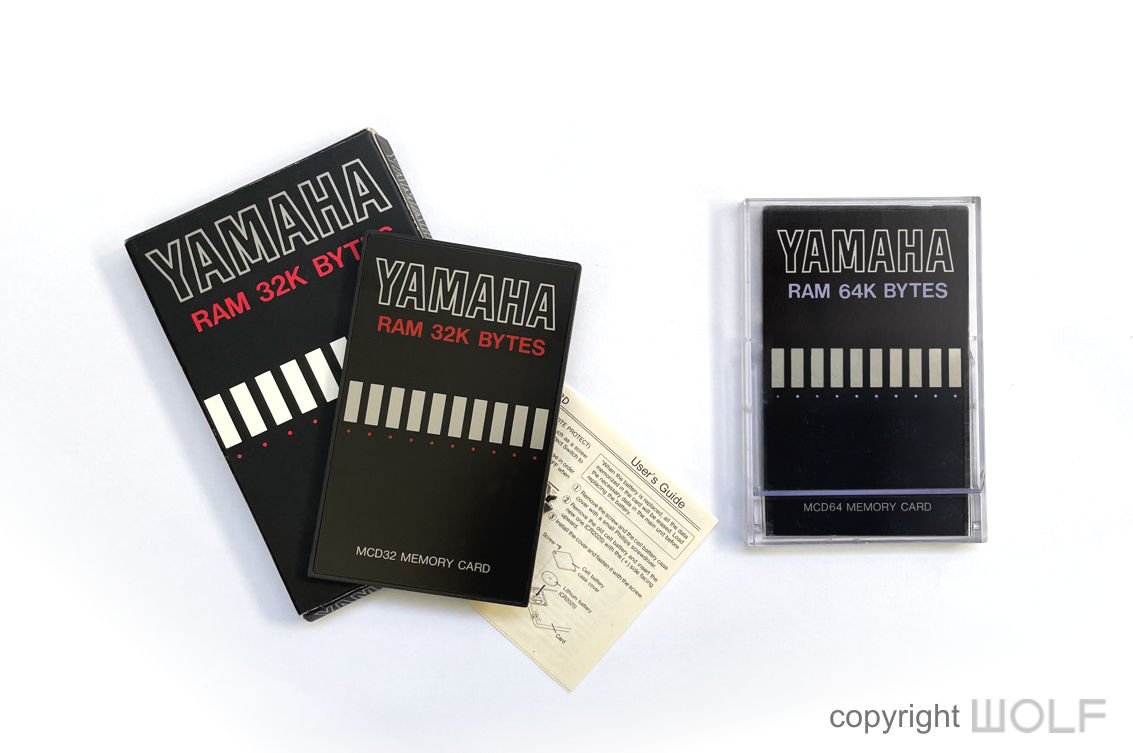
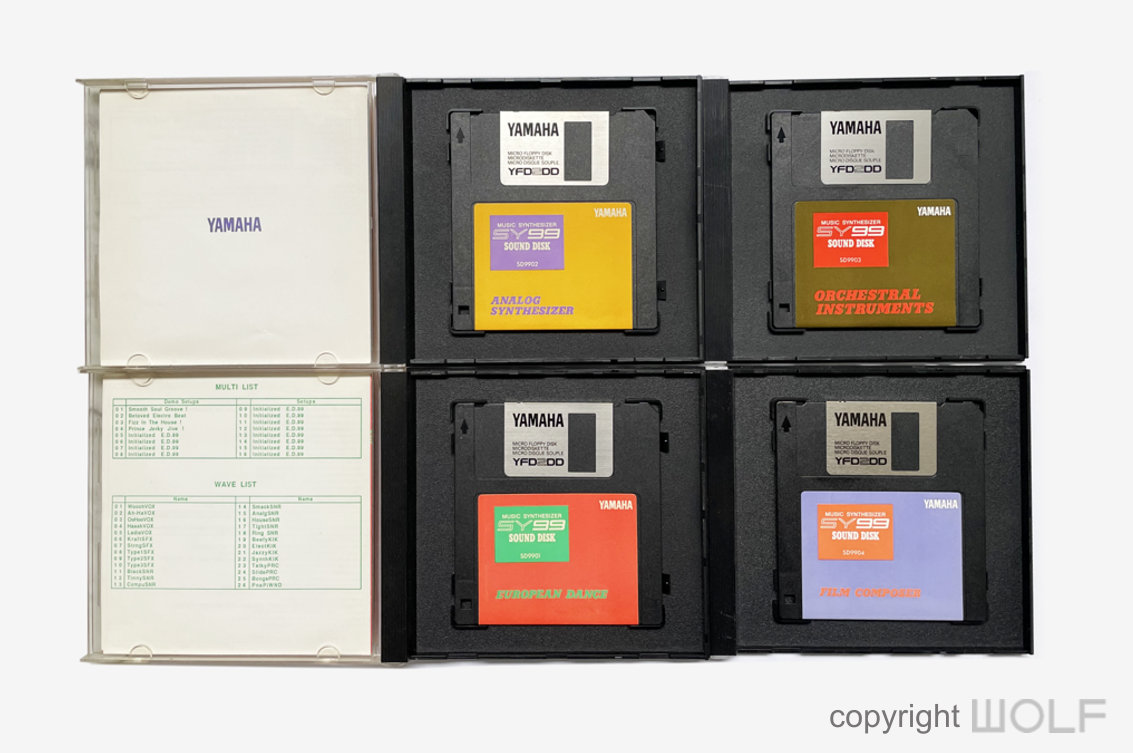 The SY99 had far fewer sounds made for it compared to the SY77 that came before. Above are the four original sound disks that were made specifically for the SY99. These four disks are the most well known official disks that Yamaha presented on their trade literature, however we believe Yamaha did make other sound disks for the SY99, such as the one shown below.
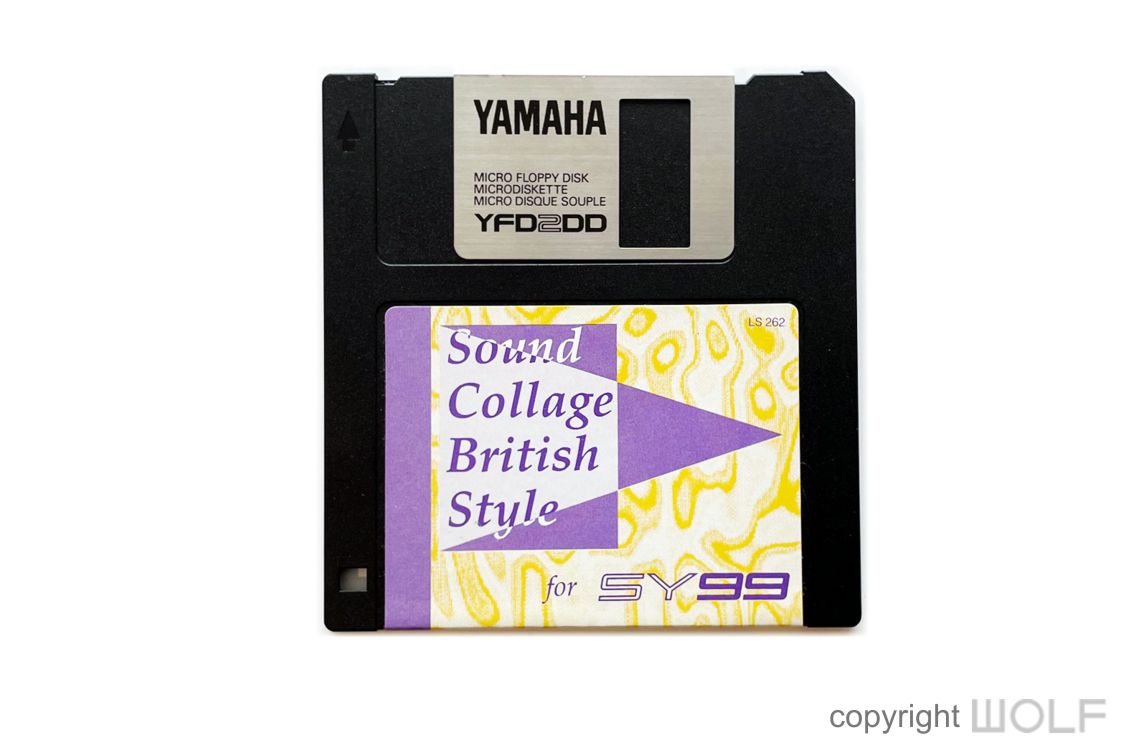
This disk is evidence that Yamaha did make other sound disks for the SY99, further to the four shown in their trade literature. We found this disk in Japan and is the only one we know of. If anyone has seen or know of others please let us know.
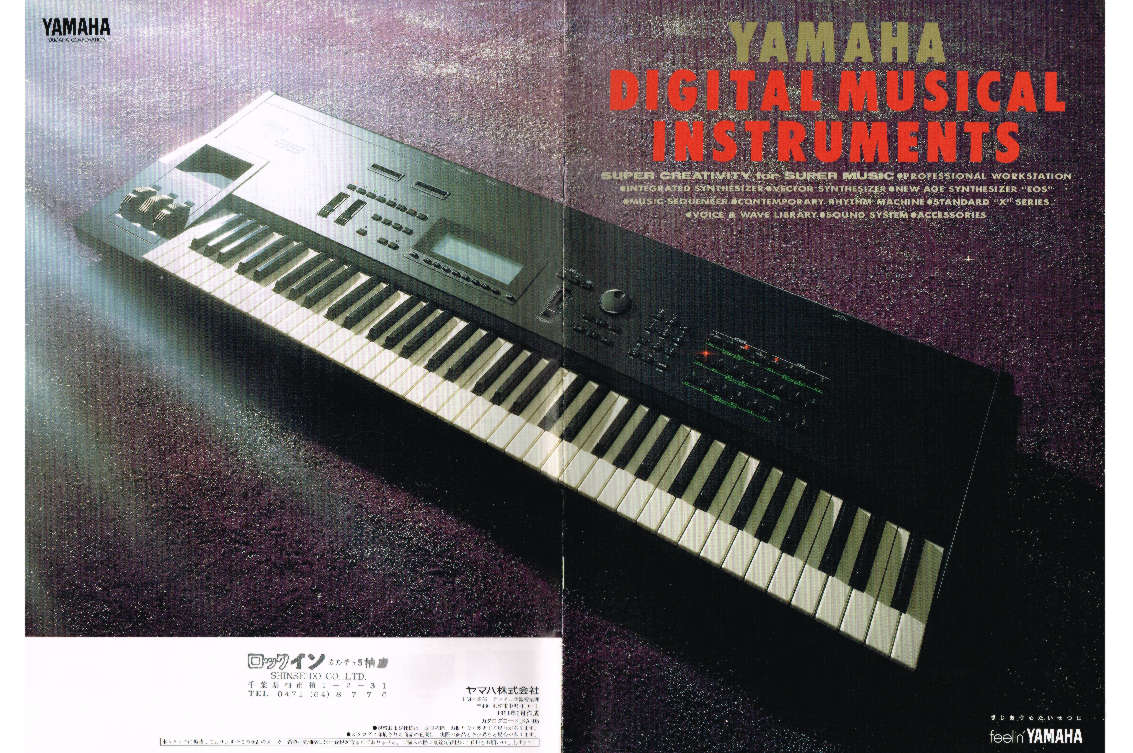
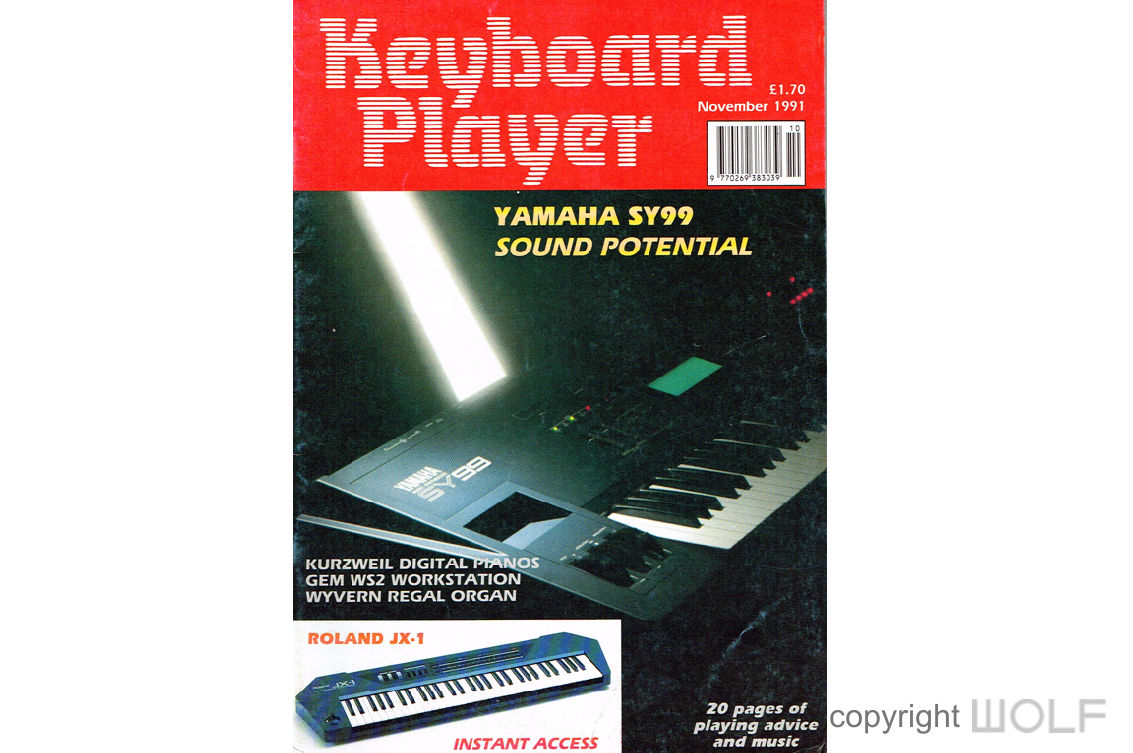
On the cover of Japans Yamaha 1991 Catalog.
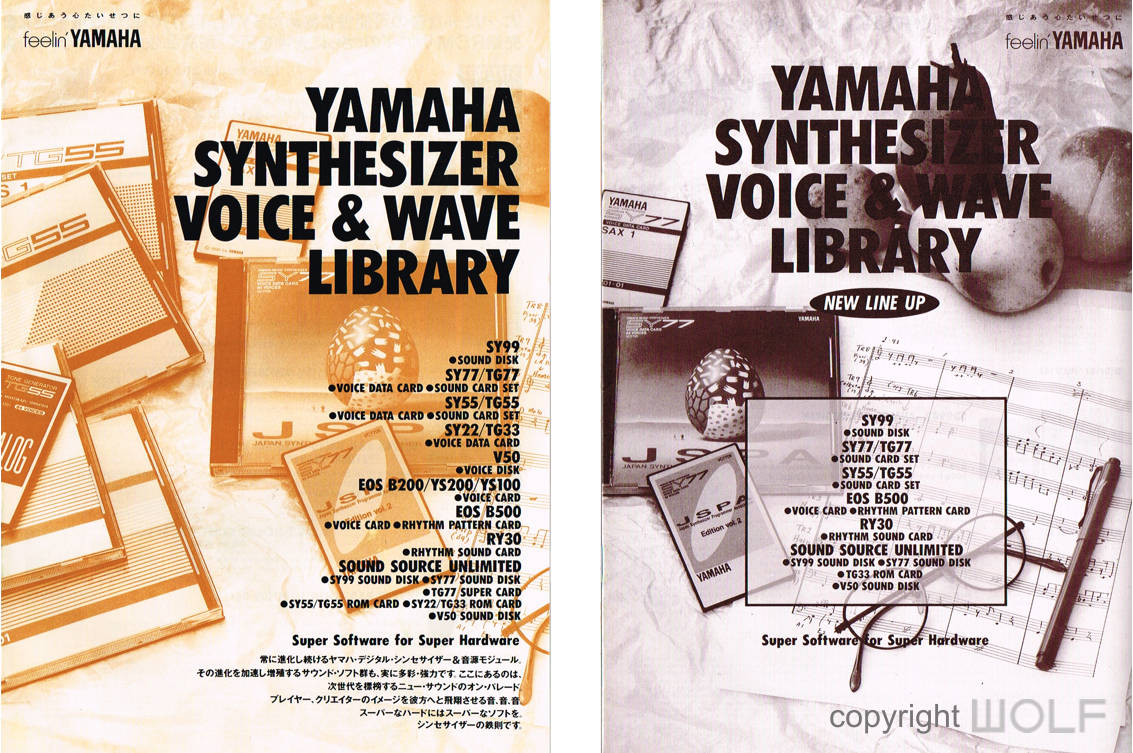
Rare Japanese brochures with extensive information on the Voice & Wave library for the SY series.
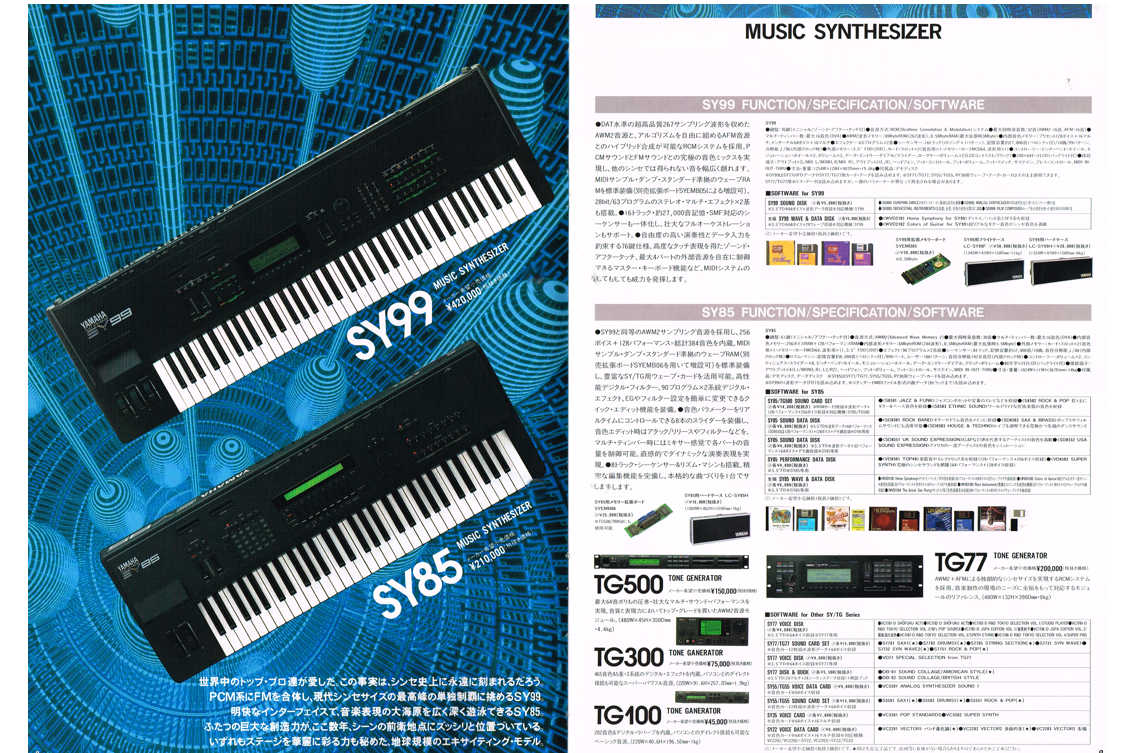
The SY99 with the SY85 replacing the SY77.
Out of the entire SY range the SY77 and SY99 are the only one’s worth collecting in our opinion, but if you had to choose one Yamaha synth from the 1990s, we would choose the SY99, even over the EX5 that came several years later. By todays standards it’s simple and easy to use with plenty of timeless sounds. For this and its solid good looks it is bound to be sought after and go up in value. Ideally it would have looked a little more interesting than just a stretched SY77, because as it is it feels like how the SY77 should have been rather than a new model.
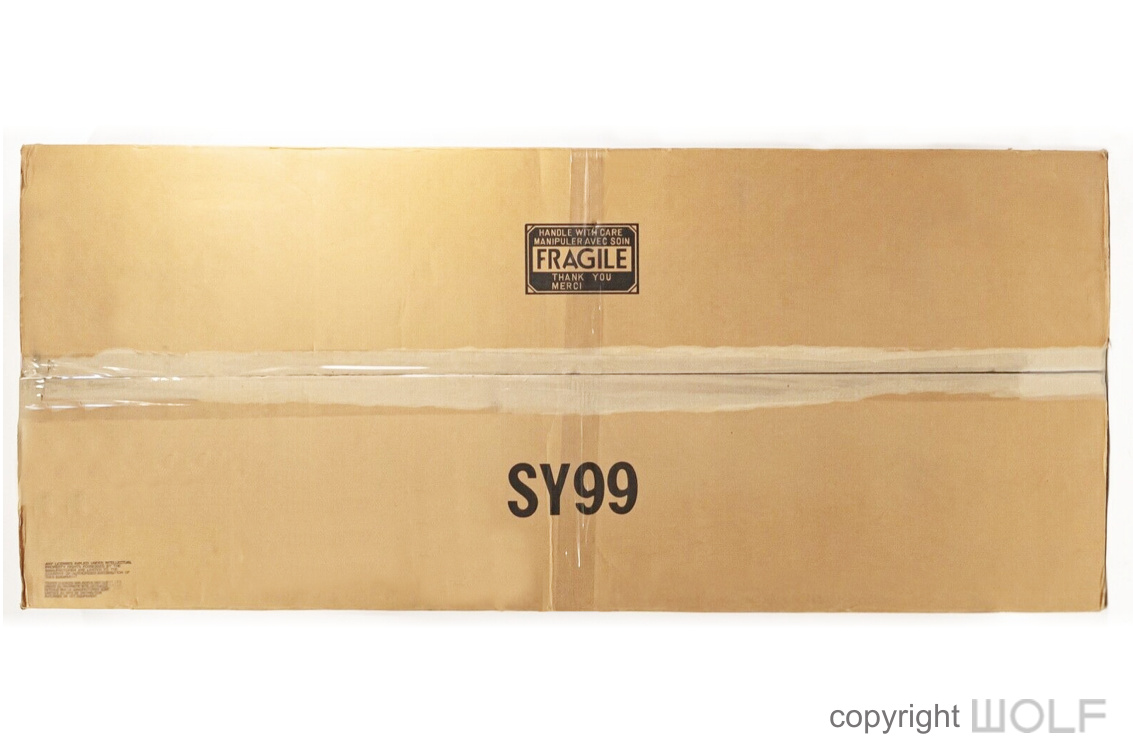
The original box, a rare sight indeed.
The WOLF SY99
The synthesizer in this review is from the Wolf private collection. It was purchased in May 2004 via an eBay auction from Italy. While in good condition many of the panels were later updated with the very last pieces Yamaha still kept in their Warehouse in Japan. In near mint condition this synth remains a personal WOLF favourite.
WOLF DESIGN EXCELLENCE SCORE = 7.0
Disclaimer
The information in this review is intended for informational or educational purposes to provide readers an understanding of how something may be seen from a certain design perspective. In this case it is from the view point of WOLF DESIGNS. As design is subjective this review should only be considered as an independent opinion. Information further to being of an opinion is provided to the best of our knowledge based on our own research at the time of doing the review. We cannot be held responsible for any inaccuracies or inconsistencies and reserve the right to change or update any content as appropriate.
The final responsibility of the design resides with the original manufacturer.
whoah this blog is great i love reading your articles. Keep up the good work! You know, a lot of people are hunting around for this info, you could help them greatly.
thanks, we love Yamaha Synths and their designs